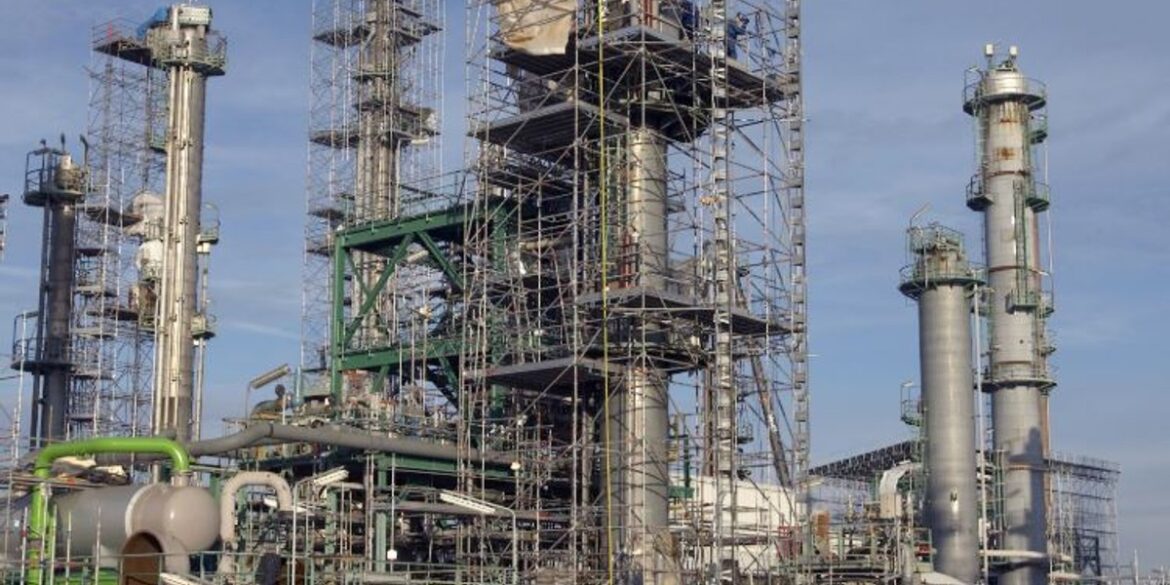
Nigeria Considers 51% Chinese Stake in Port Harcourt and Warri Refineries Under Major Refining Reform Plan
Nigeria is considering a major restructuring of its downstream petroleum sector that could see Chinese investors take majority stakes in two of its key refineries as part of efforts to restore long-stalled operations and reduce dependence on imported fuel.
The Nigerian National Petroleum Company Limited (NNPC) is reportedly advancing a proposal that could grant up to 51% equity participation to Chinese firms in the Port Harcourt and Warri refineries under a long-term technical and commercial partnership model.
If finalized, the arrangement would represent one of the most significant foreign participation shifts in Nigeria’s refining industry and could deepen China’s role in Africa’s largest oil-producing economy.
The proposed framework emerged following the signing of a Memorandum of Understanding between NNPC and Chinese companies Sanjiang Chemical Company Limited and Xinganchen (Fuzhou) Industrial Park Operation and Management Co., Ltd during a meeting in Jiaxing City, China, on April 30, 2026.
The agreement was signed by NNPC Group Chief Executive Officer Bayo Ojulari alongside Sanjiang Chemical chairman Guan Jianzhong and Xinganchen chairman Bill Bi.
Although described as a potential technical partnership, the discussions reportedly extend beyond standard refinery rehabilitation contracts and may include equity participation, operational control, and long-term performance-based involvement.
NLNG-Style Structure Under Consideration
According to individuals familiar with the talks, the proposed structure is being modelled after the Nigeria LNG Limited (NLNG) framework, where private partners hold equity stakes and play active roles in governance and operations.
Under the plan, the Chinese partners would support the completion of ongoing rehabilitation works at the Port Harcourt and Warri refineries while potentially becoming co-owners with operational responsibilities linked to efficiency and profitability.
Nigeria has spent years and significant public funds attempting to restore its state-owned refineries, but the facilities have continued to underperform, contributing to the country’s reliance on imported refined petroleum products despite being a major crude oil producer.
Industry observers say the proposed shift reflects growing concerns that traditional government-led rehabilitation efforts have failed to deliver sustainable results, prompting consideration of equity-based partnerships with technically experienced investors.
Scope of Proposed Investment
The discussions reportedly cover refinery operations and maintenance, capacity upgrades, efficiency improvements, safety systems, and the production of cleaner fuels.
Plans may also include petrochemical integration and gas-based industrial development around refinery sites, potentially transforming them into broader energy and industrial hubs.
An NNPC official familiar with the negotiations said the initiative is aimed at improving refining reliability and long-term viability, including yield optimisation and compliance with cleaner fuel standards.
Industry Reactions and Next Steps
Speaking after the signing of the MoU, NNPC CEO Bayo Ojulari described the agreement as a step toward identifying long-term technical equity partners capable of restoring and expanding Nigeria’s refining assets.
However, officials emphasized that the agreement remains non-binding and will require further technical, financial, legal, and regulatory due diligence before any final investment decision is made.
Energy sector stakeholders have described the equity-based approach as a potential shift from contractor-led rehabilitation models.
Some analysts argue that giving investors ownership stakes could align incentives toward operational efficiency and sustained performance.
The Port Harcourt refinery rehabilitation was previously awarded to Maire Tecnimont, while work at the Warri refinery has also been underway under separate contracts.
If concluded, the proposed partnership could significantly reshape Nigeria’s downstream oil sector and expand Chinese participation in refinery, petrochemical, and gas infrastructure development across the country.