Uganda Prepares for Commercial Oil Production with 74 Wells Drilled

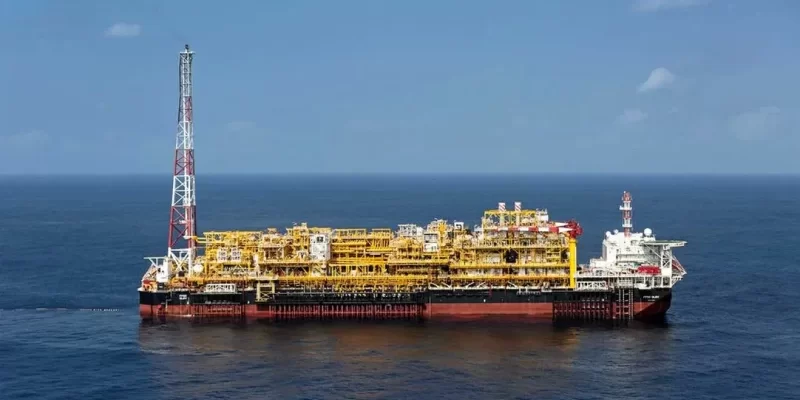
Uganda has successfully drilled 74 oil wells in its western and northern regions, setting the stage for commercial production to begin next year. During a press conference in Kampala, Ruth Nankabirwa, Uganda’s Minister of Energy and Mineral Development, announced that the wells were drilled in the Tilenga and Kingfisher production areas. This development follows the 2022 final investment decision by joint venture partners TotalEnergies E&P Uganda, China National Offshore Oil Company (CNOOC) Uganda Limited, and

Loading

Read More Here

Egypt to Import 22 LNG Shipments for Power Plants in August and September

The Egyptian government plans to import 22 liquefied natural gas (LNG) shipments in August and September to meet the fuel demands of its power plants, according to a government official speaking to Asharq Business. The official indicated that Egypt expects to receive 11 LNG shipments each month, with daily natural gas needs amounting to 6.2 billion cubic feet. Earlier this month, the Ministry of Petroleum and Mineral Resources received the 10th of 21 LNG shipments

Loading

Read More Here

South Africa Seeks Partnership with Mozambique for Natural Gas in Energy Transition

South Africa has reaffirmed its commitment to partnering with Mozambique to utilize natural gas as a transition fuel to replace coal and diesel. Recognizing the flexibility that natural gas provides in expanding renewable energy, South African Minister of Energy and Electricity, Kgosientso Ramokgopa, views a partnership with Mozambique—home to over 100 trillion cubic feet of gas reserves—as key to South Africa’s ambitious energy transition. Mozambique and South Africa are nearing the conclusion of negotiations for

Loading

Read More Here

Angola’s B- Rating Reflects Stabilization Efforts in Oil and Public Spending

Oxford Economics consultancy has noted that Standard & Poor’s (S&P) decision to maintain Angola’s credit rating at B- is a reflection of the Angolan government’s efforts to stabilize oil production and manage public expenditure. Analysts from Oxford Economics, as reported by Lusa, view this rating as evidence of the government’s attempts to stabilize oil output, control public spending, and reduce reliance on Chinese loans secured by oil revenues. The analysts acknowledge that despite recent declines

Loading

Read More Here

LAR Consortium Ships First Copper Load from Angola’s Lobito to the U.S.

The LAR – Lobito Atlantic Railway consortium announced on Friday the successful shipment of its first copper load from the Port of Lobito to the United States. The copper was transported on the container ship MSC SAMU, marking a significant milestone since the consortium took over the Lobito Corridor concession in January 2024. Prior shipments have already been made to ports in Europe and the Far East. According to a statement from LAR, the copper

Loading

Read More Here

Diamantino Urges Mineral Sector to Align with Global Energy Transition Goals

Angola’s Minister of Mineral Resources, Oil, and Gas, Diamantino Azevedo, has called on national companies in the mineral exploration sector to invest in the global energy transition, emphasizing the need to address the country’s current and future challenges. During his visit to Cuanza-Sul, the minister highlighted the importance of exploiting natural resources sustainably to benefit the population. Regarding the ongoing ban on quartz and gypsum exploration, Minister Azevedo clarified that the government has established a

Loading

Read More Here

Ghana Launches $12 Billion Refinery to Become Regional Oil Hub

Ghanaian President Nana Akufo-Addo has launched the construction of a 300,000-barrel-per-day oil refinery, positioning Ghana to become a leading petroleum hub in the region. Despite this ambitious goal, the project has faced criticism regarding potential shortcomings. Since becoming an oil producer in 2010, Ghana, the world’s second-largest cocoa producer, has seen its crude oil output reach approximately 132,000 barrels per day (bpd) and its natural gas production around 325 million standard cubic feet per day.

Loading

Read More Here

Niger Resumes Crude Oil Exports Through Benin After Dispute Resolution

Landlocked Niger has resumed crude oil exports via Benin, following a previous disruption caused by a trade dispute. The dispute halted shipments through a newly constructed Chinese-funded pipeline. The conflict began when Niger refused to lift its ban on imports from Benin, leading Benin to block oil exports through the PetroChina-backed pipeline in May, as reported by Reuters. Niger subsequently halted oil flow through the pipeline in June. In response, the junta-led government of Niger

Loading

Read More Here

Sasol’s Two-Decade Impact on Mozambique’s Natural Gas Sector

Over the past 20 years, Sasol has exported 2.695 billion gigajoules of the 3.47 billion gigajoules of natural gas produced in Mozambique. This significant milestone has firmly established Mozambique as a key regional natural gas producer and laid the groundwork for the development of the national oil sector. President Filipe Nyusi highlighted this achievement during the 20th-anniversary celebration of the National Petroleum Institute (INP) in Maputo. He emphasized that Sasol’s gas exploitation from the Temane

Loading

Read More Here

Angola Expands Diamond Industry with Eight New Cutting Factories in Five Years

Between 2019 and 2024, Angola significantly expanded its diamond cutting industry by opening eight new cutting factories. These include the Stone Polished Diamond factories in Luanda, with a combined processing capacity of 24,000 carats per year, KGK (60,000 carats/year), and Pedra Rubra (60,000 carats/year). At the Saurimo Diamond Development Pole (PDDS), KGK opened additional factories with a capacity of 180,000 carats per year, alongside Stardiam (72,000 carats/year), Kapau Gems (54,000 carats/year), Pollaro (60,000 carats/year), and

Loading

Read More Here