Dangote Refinery Boosts Nigerian Crude Purchases as Iran Conflict Disrupts Global Oil Markets
Aliko Dangote’s refinery is significantly increasing its purchases of Nigerian crude oil as geopolitical tensions linked to the Iran conflict continue to reshape global energy markets.
The disruption in Middle Eastern supply routes has created new trading dynamics, positioning Africa’s largest refinery as a key beneficiary of shifting oil flows.
According to market reports, including Bloomberg, the Dangote Petroleum Refinery has stepped up domestic crude procurement as some international buyers scale back demand for West African grades amid uncertainty in global supply chains.
This has contributed to upward pressure on premiums for Nigerian crude compared to Angolan benchmarks, reflecting changing regional trading patterns driven by geopolitical risk.
The development also highlights a broader structural shift within Nigeria’s oil industry. For decades, the country exported the majority of its crude oil while relying heavily on imported refined petroleum products to meet domestic demand.
The $20 billion Dangote Refinery was designed to reverse this model by increasing local refining capacity and reducing dependence on fuel imports.
Now, amid global supply disruptions linked to the Iran conflict and instability in Middle Eastern energy corridors, the refinery is emerging as one of the largest domestic buyers of Nigerian crude.
This trend is expected to retain more value within the national economy by expanding local processing capacity and reducing exposure to volatile international fuel prices.
The timing of this shift is notable. Earlier this month, the refinery reported processing more than 700,000 barrels of crude oil per day during a performance test, exceeding its official nameplate capacity of 650,000 barrels per day.
The achievement marks a significant operational milestone and reinforces its status as Africa’s largest refinery.
In parallel, Dangote Refinery is reportedly preparing to raise around $1 billion through a private placement ahead of a planned public listing.
The fundraising exercise is expected to value the company at approximately $39.1 billion.
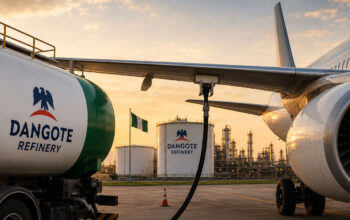
The refinery’s expanding output is already having regional and international effects. Exports of petrol, diesel, and jet fuel have increased across African markets and beyond, reducing reliance on refined fuel imports from Europe and the Middle East.
Company executives have also noted growing global demand for its jet fuel supply, positioning the refinery as an emerging international supplier.
The increased demand for Nigerian crude comes as global energy markets continue to react to instability stemming from the Iran conflict.
Concerns over potential supply disruptions and the security of key maritime routes have forced refiners and traders to reassess sourcing strategies, creating opportunities for producers and downstream processors outside the Middle East.
For Nigeria, the implications are significant. Rising domestic crude consumption strengthens local producers, supports industrial value addition, and advances the country’s long-term goal of expanding domestic refining capacity.
It also reduces reliance on imported fuels, improving energy security and foreign exchange stability.
As global markets remain volatile, the Dangote Refinery is increasingly positioned not only as a national industrial asset but also as a major strategic player in Africa’s evolving energy landscape.