Namibia Seeks Angola’s Guidance to Unlock Oil and Gas Potential and Drive Regional Energy Growth
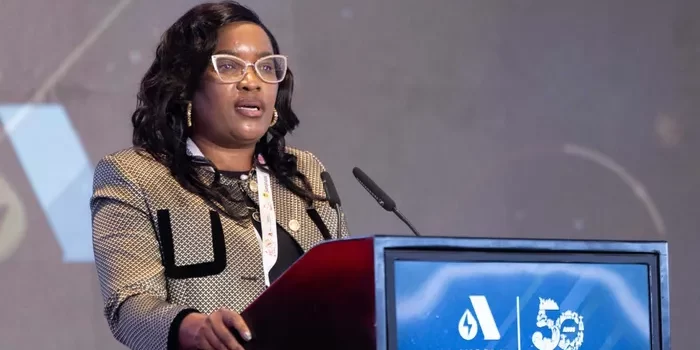
Maggy Shino, Petroleum Commissioner at Namibia’s Ministry of Mines and Hydrocarbons, underscored the critical role of regional collaboration in shaping Africa’s energy future during the Angola Oil & Gas (AOG) 2025 Conference and Exhibition.
Delivering a keynote address on behalf of Kornelia Shilunga, Presidential Special Advisor and Head of the Upstream Petroleum Unit in the Office of the President, Shino stressed that the lessons Angola has learned over the last 50 years can provide a roadmap for Namibia as it transitions into an emerging oil and gas producer.
“Today, as independent nations, we stand together once again, this time not on the battlefield of liberation, but on the frontier of energy development,” said Shino. “Just as Angola celebrates its 50 years of independence with hard-earned pride, Namibia is preparing to celebrate its own journey of sovereignty and energy development.”
Angola’s half-century of oil production offers vital insights for new African producers, particularly Namibia, which has witnessed a surge in world-class offshore discoveries in recent years. Yet, Shino cautioned that hydrocarbons alone cannot guarantee prosperity.
“The policies we adopt, the partnerships we foster, and the strategies we pursue will determine whether our resources become a blessing for all or a missed opportunity,” she emphasized.
For Namibia, Angola’s experience in managing mature fields, designing robust fiscal regimes, and implementing local content policies provides a valuable foundation. Angola’s journey—marked by both successes and challenges—can guide Namibia in crafting a resilient governance framework and ensuring long-term benefits from resource wealth.
Namibia and Angola not only share borders but also geological continuity in their offshore basins, making collaboration a natural step forward. According to Shino, this proximity creates opportunities for partnership in:
Policy alignment to create consistent fiscal and regulatory environments.
Skills transfer, with Angolan universities, training centers, and institutions helping to develop Namibian engineers, geoscientists, and technicians.
Enterprise development, where Namibian SMEs can integrate into the regional oil and gas supply chain by collaborating with established Angolan service providers.
Infrastructure integration, including shared use of ports, pipelines, and power networks, to strengthen energy trade and resilience.
Local Content at the Core of Namibia’s Strategy
Shino reiterated that local content is central to Namibia’s petroleum vision, ensuring that revenues circulate within the national economy to empower citizens and businesses.
“Our vision is to ensure that the wealth generated from petroleum resources does not leave behind only rigs and memories, but rather lasting development and prosperity,” she said.
This approach aligns with broader regional goals of inclusive energy-driven development, where oil and gas revenues translate into new schools, hospitals, infrastructure, and industrial opportunities.
Building a Regional Energy Hub
By deepening ties with Angola, Namibia hopes to position itself not just as an oil producer but as part of a regional energy hub capable of attracting investment, improving energy security, and enhancing Africa’s role in global markets.
“Through stronger Angola-Namibia collaboration, both countries can drive not only the development of their oil, gas, and energy resources but also the advancement of their broader economies,” Shino concluded.