African Demand for Chinese Solar Equipment Surges 83% as Energy Crisis Accelerates Renewable Transition
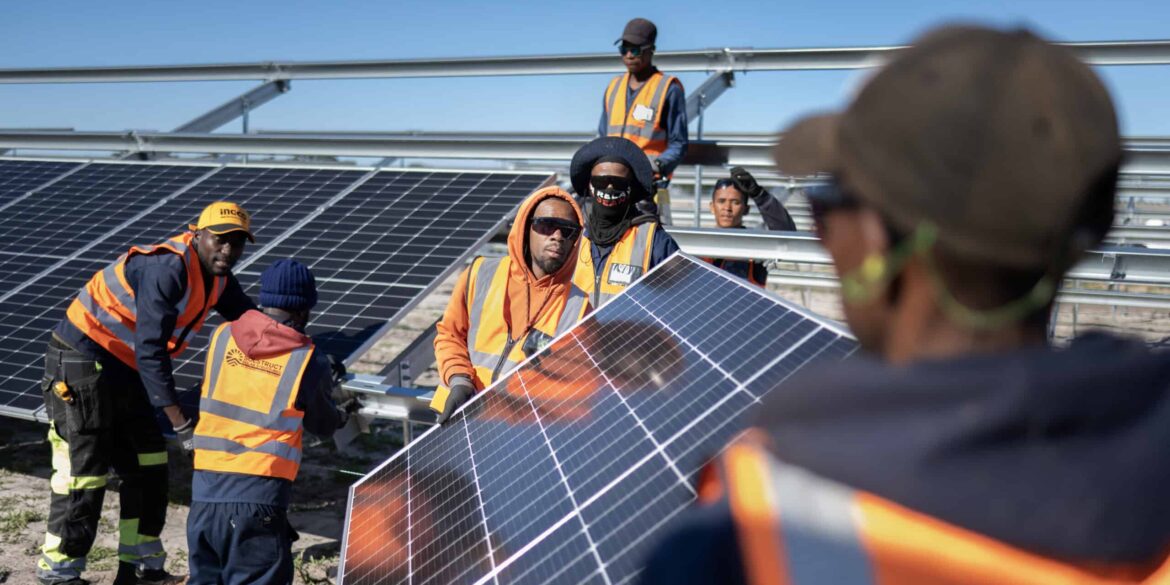
Africa’s deepening electricity shortages and rising energy costs are fueling a sharp increase in demand for Chinese solar equipment, further consolidating China’s dominance in the global renewable energy supply chain.
New customs data released by China shows that exports of solar cells and panels to African countries rose 83% year-on-year in April, reaching 123,787 metric tonnes, up from 67,552 tonnes during the same period last year.
The surge reflects a growing shift across the continent toward solar energy as governments, businesses, and households seek alternatives to unreliable electricity grids, high diesel costs, and volatile fuel prices.
Strong demand despite policy changes in China
Although shipments declined from March’s record high of 209,474 tonnes, analysts note that demand remains robust even after China ended its solar export tax rebate policy on April 1 a move expected to increase global solar equipment prices.
The March spike was largely driven by international buyers accelerating purchases ahead of the policy change.
South Africa and DRC lead African imports
South Africa remained one of the continent’s largest importers of Chinese solar products in April, with shipments increasing 81.4% year-on-year.
The growth reflects continued investment in alternative power solutions as the country grapples with prolonged electricity shortages and grid instability.
Democratic Republic of the Congo recorded one of the fastest growth rates globally, with imports surging 482% to 17,953 tonnes.
Despite abundant mineral resources essential to the global energy transition, the country still faces extremely low electricity access rates, making off-grid solar solutions increasingly critical.
Across Africa, solar power is becoming both an economic necessity and a strategic infrastructure investment.
Rapid urbanization, industrial expansion, weak transmission networks, and rising fuel import bills are pushing governments toward renewable energy as a scalable long-term solution.
China’s dominance in solar manufacturing has made it the primary supplier for many developing economies, thanks to competitive pricing and large-scale production capacity.
Global solar trade trends remain strong
Beyond Africa, Chinese solar exports to Southeast Asia rose 75% year-on-year in April, reaching 170,733 tonnes, although volumes eased from March’s peak of 336,891 tonnes.
Overall exports of Chinese solar equipment increased 60% year-on-year in unit terms in April, though total shipment growth was more modest at 4% due to weaker demand from parts of South Asia and the Middle East.
The Netherlands remained the world’s largest importer by volume, with shipments valued at $380.8 million, although total imports declined 2.5% year-on-year to 177,391 tonnes.
The Philippines ranked second globally but also saw a sharp monthly decline following earlier pre-policy stockpiling.
China’s growing influence in the energy transition
The latest data underscores China’s expanding role in the global energy transition, as countries accelerate renewable energy deployment to reduce emissions and protect consumers from volatile fossil fuel markets.
For Africa, the trend highlights a growing geopolitical reality: while many Western economies continue to debate climate financing mechanisms and energy transition support, China is rapidly positioning itself as the dominant supplier of renewable energy technology across the continent.