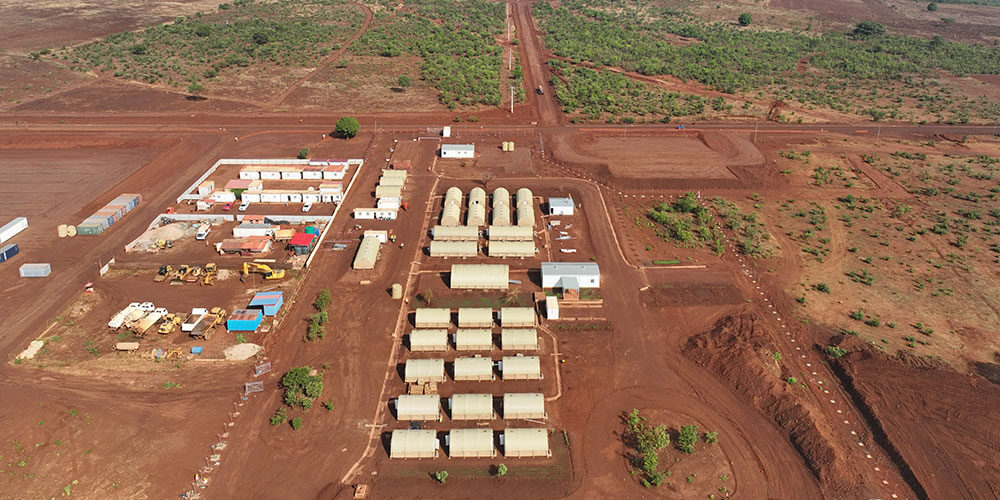
Angola’s Longonjo Rare Earth Project Adds Dysprosium and Terbium to Resource Potential
Angola’s Longonjo rare earth project in Huambo Province has strengthened its strategic potential following the identification of dysprosium (Dy) and terbium (Tb), adding to the previously identified neodymium (Nd) and praseodymium (Pr).
The discovery was announced following a visit by Mineral Resources, Petroleum and Gas Minister Diamantino Azevedo to the Ozango Minerais project, which is being developed by UK-based Pensana with participation from the Angolan Sovereign Fund.
New Critical Minerals Expand Project Potential
Dysprosium and terbium are important, rare-earth elements used in high-performance permanent magnets, including those required for electric vehicle motors and wind turbines, as well as applications in nuclear technology and sonar systems.
The discovery could broaden the project’s resource base and increase its importance within global supply chains for critical minerals, particularly as countries seek to diversify rare earth supply beyond established producers and processors.
Project Advances Towards 2028 Production
Development of Longonjo has reached approximately 25% completion, with work progressing on the tailings storage facility and technical design of the beneficiation plant.
Ozango Minerais CEO Alcídio José said the processing plant will be modular, allowing for future expansion.
Commissioning is currently expected in October 2027, with commercial operations targeted for 2028.
The first phase is designed around an extraction zone containing approximately 42 million tonnes of ore, which is expected to produce about 20,000 tonnes of concentrate annually following processing.
Significant Rare Earth Resource
Longonjo is hosted in a weathered carbonatite formation containing monazite and bastnäsite.
The project has estimated reserves of 21.54 million tonnes, grading 3.04% rare earth oxides, equivalent to approximately 654,965 tonnes of rare earth oxides.
The resource includes an estimated 130,457 tonnes of neodymium and praseodymium, alongside 2,920 tonnes of terbium and dysprosium. Proven reserves could support more than 20 years of open-pit mining.
The project is owned 67.6% by Pensana, 26.7% by the Angolan Sovereign Fund and 5.7% by minority shareholders.
With additional rare earth elements now identified and development advancing, Longonjo is emerging as a potentially important source of critical minerals for Angola and global technology supply chains.