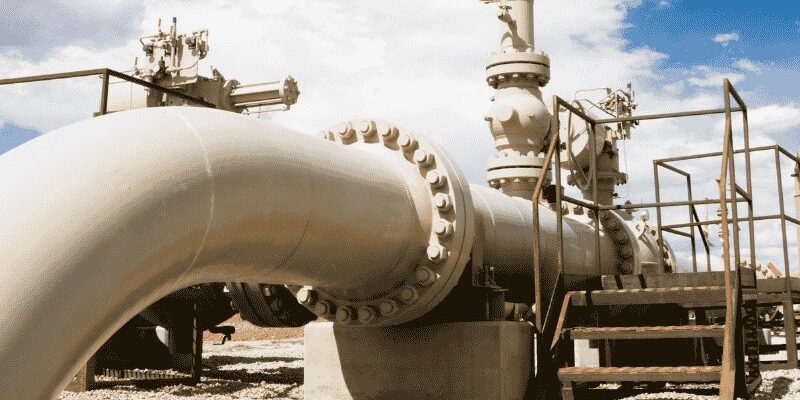
Libya’s NOC Activates First Phase of Farigh–Brega Gas Pipeline to Boost Power Supply and Support 2030 Production Targets
Libya’s National Oil Corporation (NOC) has launched the first phase of the Farigh–Brega gas pipeline, marking a significant milestone in efforts to strengthen domestic gas supply and enhance energy security.
The initial segment of the pipeline is now operational, with gas pumping and pressure balancing underway as system integration continues across the network.
The development reflects Libya’s broader strategy to stabilize energy supply, expand gas production and reinforce its role as a leading energy producer in North Africa.
As production targets increase and investor interest gradually returns to the sector, the new pipeline is expected to support domestic demand while positioning the country to expand gas exports to regional and European markets over the longer term.
The first phase of the project connects the Farigh gas field, located along the Zueitina axis (Field 103A), to a 42-inch trunkline at kilometer 91 within the Sirte Basin transmission network.
This 30-kilometer segment is designed to deliver natural gas into Brega and the coastal distribution grid, with full operational integration expected by the end of the month.
Strategically, the pipeline will strengthen gas supply to the power generation sector, which accounts for approximately 70% of Libya’s electricity production.
By increasing the availability of natural gas and reducing reliance on more expensive liquid fuels, the project is expected to lower subsidy costs, improve power generation efficiency and support key industrial consumers, including fertilizer and methanol producers.
The Farigh field, situated in the Sirte Basin, represents a key upstream asset operated by Waha Oil Company, a joint venture between the National Oil Corporation and international energy companies TotalEnergies and ConocoPhillips.
Recent well additions and planned development activities are expected to increase production capacity at the field to approximately 250 million cubic feet per day.
Brega remains one of Libya’s most important downstream energy hubs, hosting refineries, petrochemical facilities and export infrastructure critical to the country’s energy system.
As a major coastal processing center, the facility plays a central role in supplying gas for domestic consumption while supporting industrial sectors that rely on stable feedstock, including fertilizer and methanol manufacturing.
The commissioning of the Farigh–Brega pipeline underscores Libya’s renewed focus on strengthening its gas sector and addressing growing domestic energy demand.
During an energy summit in Tripoli earlier this year, NOC Chairman Massoud Suleiman emphasized the urgency of increasing gas production to prevent a potential domestic energy shortfall, highlighting the expansion of gas infrastructure as a core component of the corporation’s long-term strategy.
Libya is estimated to hold approximately 80 trillion cubic feet of natural gas reserves and is targeting production levels of up to 2 billion cubic feet per day by 2030.
Recent offshore discoveries and existing export infrastructure, including the Greenstream pipeline linking Libya to European markets, continue to support the country’s ambitions to expand its role in regional gas supply, despite persistent security and investment challenges.