
World Diamond Day 2026: GIA Reveals History and Science Behind Legendary Diamonds
In honor of World Diamond Day on April 8, the Gemological Institute of America (GIA) has showcased some of the world’s most famous and fascinating diamonds it has examined over the decades.
Since its founding in 1931, GIA has become the global authority in gemology, assessing over four million diamonds annually and uncovering the science, history, and rarity behind stones that have captivated collectors, museums, and the public.
Among the most remarkable diamonds studied are the Hope Diamond, Dresden Green, Winston Red, Taylor-Burton Diamond, and the recently examined Motswedi Diamond, the largest single-crystal diamond ever analyzed by GIA.
These diamonds are celebrated not only for their beauty but also for the rich histories they carry.
The 45.52 ct Hope Diamond, known for its Fancy Dark Grayish Blue color, traveled from India to the Smithsonian Institution in Washington, DC, and remains one of the world’s most famous colored diamonds.
The 41 ct Dresden Green is the largest known natural green diamond, while the 2.33 ct Winston Red is one of the rarest pure red diamonds and the only Fancy Red diamond on public display.
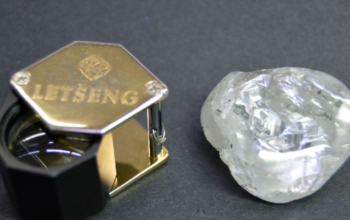
In 2024, GIA examined the 2,488 ct Motswedi Diamond, recovered from Botswana. This Type IIa high-purity gem drew global attention for its size and quality.
As the second-largest gem-quality diamond ever discovered, it offers scientists a unique insight into diamond formation deep within the Earth, where carbon crystallizes under extreme pressure and temperature hundreds of kilometers below the surface.
“For nearly a century, GIA has advanced gemological knowledge, setting global standards that underpin confidence in gems and jewelry,” said GIA president and CEO Pritesh Patel.
GIA pioneered the 4Cs of Diamond Quality and the GIA International Diamond Grading System in the 1940s and 1950s, continuing to provide transparency and scientific rigor to a complex global market.
The institute has also examined royal treasures like the Marie-Thérèse Pink Diamond and historic gems such as the Antique Mughal Spectacles with gemstone lenses.
Through grading and research, GIA documents the characteristics, origins, and significance of extraordinary stones, ensuring that both collectors and consumers can trust the value and authenticity of diamonds and gemstones.
“Examining these extraordinary stones reflects not only their rarity and history but also GIA’s enduring commitment to science, transparency, and leadership in gemology,” Patel noted.