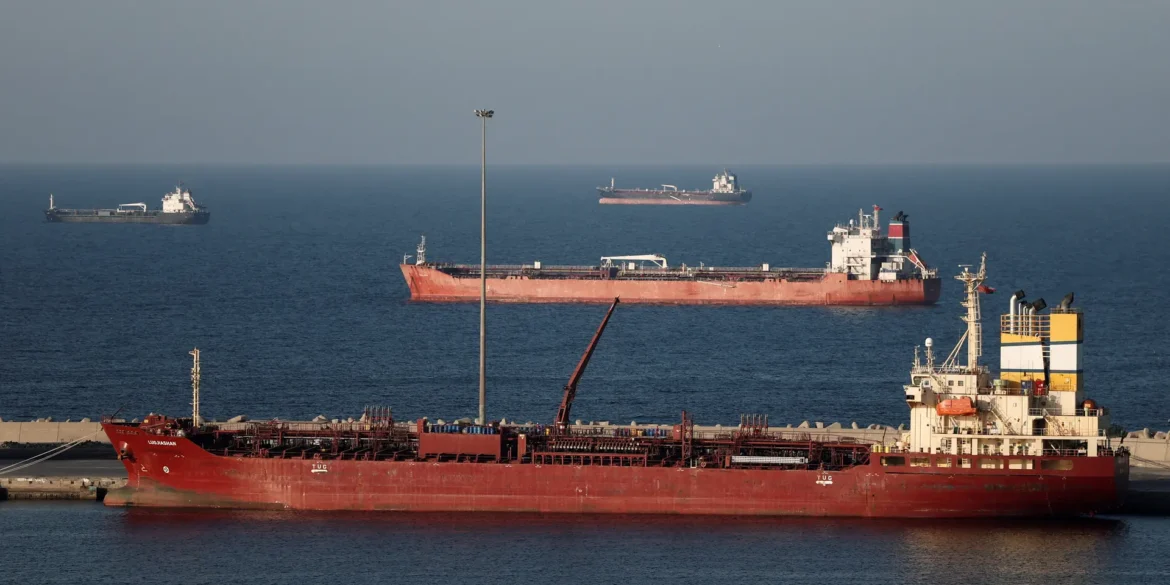
Strait of Hormuz Disruptions Push Global Trade Toward Africa’s Red Sea, Gulf of Aden, and Atlantic Shipping Corridors
Africa is emerging as an increasingly important player in global energy and maritime logistics as ongoing disruptions in the Middle East drive a significant rerouting of international shipping away from the Strait of Hormuz, one of the world’s most critical oil transit chokepoints.
Recent shipping data indicates that traffic through the Strait of Hormuz has fallen by as much as 90%, as heightened geopolitical tensions involving Iran, the United States, and regional allies continue to raise concerns over the security and reliability of Gulf shipping routes.
As a result, oil tankers and commercial vessels are increasingly being diverted along Africa’s maritime corridors, reshaping global trade flows.
This shift is prompting oil producers, shipping companies, and investors to reassess their dependence on traditional Gulf routes, with growing attention turning toward Africa’s Red Sea, Gulf of Aden, and Atlantic Ocean corridors as alternative and potentially more stable transit options.
Iraq Leads Efforts to Diversify Export Routes
Iraq is at the forefront of efforts to reduce reliance on the Strait of Hormuz, with plans to reactivate a long-idle pipeline connecting its southern oil hub in Zubair to the Saudi Red Sea port of Yanbu.
The pipeline, with a capacity exceeding 1.6 million barrels per day, would allow crude exports to bypass the Strait of Hormuz entirely and reach global markets via the Red Sea corridor.
This initiative reflects a broader strategy among Gulf producers to diversify export infrastructure and reduce exposure to geopolitical risks in the region.
The urgency of these efforts has been reinforced by recent disruptions to energy infrastructure, with estimates from Rystad Energy placing potential repair costs at up to $58 billion.
The International Energy Agency has also reported that more than 80 oil and gas facilities have been affected by recent attacks, with some requiring years to fully restore.
Red Sea and Horn of Africa Gain Strategic Importance
As shipping patterns adjust, the Red Sea corridor is becoming a critical artery for global energy and trade flows, strengthening the strategic importance of countries such as Egypt, Sudan, and Djibouti.
Egypt continues to play a central role through the Suez Canal, while Djibouti is expanding its position as a regional logistics and transshipment hub.
Alternative infrastructure is also gaining importance, including Egypt’s SUMED pipeline, which allows crude oil to bypass Suez Canal congestion, and Saudi Arabia’s East–West pipeline, which connects Gulf production fields directly to Red Sea export terminals.
However, the security situation around the Bab el-Mandeb Strait remains a concern, leading some shipping companies to reroute vessels around the Cape of Good Hope during periods of heightened risk.
The Gulf of Aden is also gaining prominence as a key transit route linking the Indian Ocean to Europe-bound shipping lanes, further elevating the strategic role of the Horn of Africa.
Ports such as Berbera in Somaliland are being developed with external investment to support increasing demand for alternative logistics infrastructure.
These shifts are already visible in global shipping patterns, with major operators including Maersk, Hapag-Lloyd, and CMA CGM rerouting vessels via southern Africa to avoid high-risk areas.
Even military logistics have been affected, with reports indicating that the USS George H.W. Bush recently sailed around the Cape of Good Hope rather than transiting the Red Sea due to security concerns.
West Africa and the Atlantic Corridor Emerge as Alternatives
In parallel, West Africa is positioning itself as an emerging Atlantic-facing logistics alternative.
The Port of Lomé in Togo is increasingly being promoted as a strategic transshipment hub capable of serving both Asian and European trade routes while avoiding high-risk maritime chokepoints.
Officials in Togo have highlighted the port’s growing role in global logistics diversification, emphasizing its potential to serve as an alternative to congested or unstable routes through the Strait of Hormuz and the Red Sea.
Further west, the Strait of Gibraltar is also gaining renewed strategic relevance as the only natural maritime link between the Atlantic Ocean and the Mediterranean Sea.
A proposed €20 billion subsea tunnel project between Spain and Morocco is expected to further strengthen trade integration between Europe and Africa, reinforcing the corridor’s long-term importance.
A Reconfigured Global Trade Map with Africa at the Centre
The sustained disruption of the Strait of Hormuz is accelerating a structural shift in global trade and energy logistics. As shipping routes are reconfigured to mitigate geopolitical risk, Africa is increasingly positioned as a central alternative corridor linking global markets.
From Djibouti and Berbera in the east to Lomé and the Atlantic ports in the west, the continent is gaining strategic relevance in global supply chains.
While challenges remain, including infrastructure capacity and maritime security, Africa’s role in global trade logistics is clearly expanding as companies seek safer and more resilient shipping routes.