Nigeria’s $300 Million Renewable Energy Fund Covers Just 2% of Off-Grid Electrification Requirement
Nigeria’s ambitious efforts to expand electricity access through decentralized renewable energy (DRE) solutions have received a significant boost with the establishment of a US$300 million fund.
However, industry experts warn that the financing package addresses only a small fraction of the investment required to bring power to millions of Nigerians who remain disconnected from the national grid.
According to energy sector stakeholders, the fund is expected to cover just 2% of the country’s estimated off-grid electrification needs, highlighting the scale of the challenge facing Africa’s most populous nation.
More than 80 million Nigerians are still without reliable access to electricity, particularly in rural and underserved communities where extending the national grid remains economically difficult.
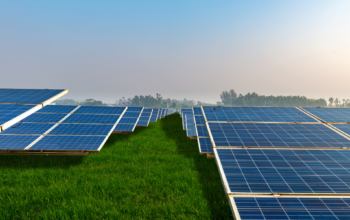
Decentralized renewable energy systems, including solar mini-grids and standalone solar home systems, have emerged as a critical component of Nigeria’s electrification strategy.
These technologies provide a cost-effective alternative for remote regions, allowing households, businesses, schools, and healthcare facilities to access power without waiting for major grid infrastructure investments.
While the US$300 million fund is expected to accelerate project deployment and attract additional private sector participation, analysts note that substantially larger investments will be required to close the country’s electricity access gap.
Estimates suggest that billions of dollars in funding will be needed over the coming years to meet national electrification targets and support growing energy demand.
The funding initiative reflects increasing recognition among policymakers, development finance institutions, and investors that off-grid renewable energy will play a central role in Nigeria’s economic development.
Reliable electricity access is widely regarded as essential for improving education, healthcare delivery, digital connectivity, agricultural productivity, and small business growth.
Nigeria has become one of Africa’s largest markets for distributed renewable energy technologies, attracting significant interest from international developers and financiers.
The country’s vast population, strong solar resource potential, and persistent energy deficit have positioned it as a key destination for investment in clean energy solutions.
Despite the positive momentum, industry leaders emphasize that financing remains one of the biggest barriers to scaling off-grid energy deployment.
Additional funding mechanisms, risk mitigation instruments, concessional financing, and public-private partnerships will be necessary to unlock the level of investment needed to achieve universal electricity access.
The funding gap also presents significant opportunities for renewable energy developers, equipment suppliers, investors, and financial institutions seeking to participate in one of Africa’s fastest-growing clean energy markets.
As Nigeria continues to pursue its energy transition and electrification objectives, expanding access to capital will be crucial to delivering reliable and sustainable power to millions of people currently living without electricity.