Global Gas Flaring Reaches 167 Billion Cubic Metres, Matching Africa’s Annual Gas Consumption, World Bank Says
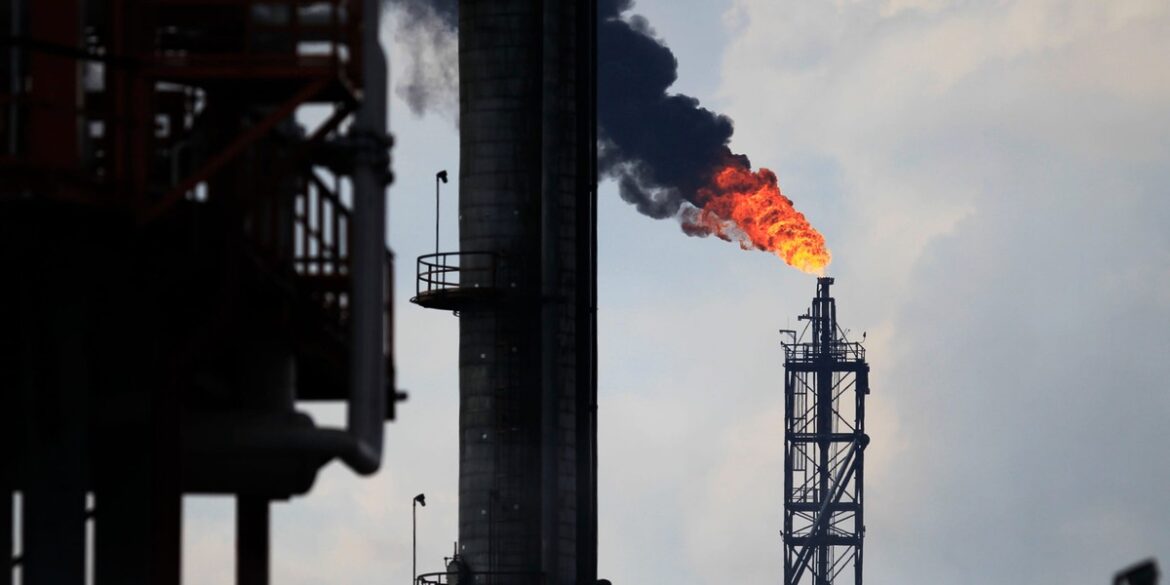
Global gas flaring increased to 167 billion cubic metres in 2025, its highest level since 2019, highlighting a growing challenge for energy security and economic development, particularly in Africa, according to the World Bank’s Global Gas Flaring Tracker Report 2026.
The report found that gas flaring has risen for the third consecutive year, indicating that efforts to reduce the practice have lost momentum despite the availability of proven technologies to capture and utilise associated gas.
Gas flaring occurs when natural gas produced alongside crude oil is burned instead of being captured for productive uses such as electricity generation, industrial applications, cooking fuel or exports.
A growing challenge for Africa
According to the World Bank, the volume of gas flared globally in 2025 was roughly equivalent to Africa’s total annual natural gas consumption.
The findings highlight the continent’s ongoing energy challenge, where many countries continue to experience electricity shortages despite significant oil and gas production.
Limited access to reliable electricity remains a major obstacle to economic growth across Africa, increasing business operating costs, constraining industrial development and reducing productivity.
The report estimates that more than 500 million people in developing countries still lack reliable electricity, while substantial volumes of associated gas continue to be flared instead of being used to support domestic energy needs.
It also noted that electricity outages are associated with an estimated 13.5% reduction in employment across Africa, illustrating the broader economic impact of unreliable power supply.
Untapped potential of associated gas
The World Bank said associated gas represents an important resource that could help improve electricity generation, expand access to clean cooking fuels and support industrial development if captured and utilised effectively.
Liquefied petroleum gas (LPG), which can be produced from associated gas, could also help reduce dependence on traditional biomass fuels in many developing economies while improving household energy access.
Several African oil-producing countries, including Nigeria, Libya, Algeria, Angola and the Republic of Congo, continue to face challenges in developing gas infrastructure, expanding domestic gas markets and increasing investment in gas-to-power projects.
Existing solutions require greater implementation
The report noted that the technologies required to significantly reduce gas flaring are already commercially available.
These include gas processing facilities, gas-to-power plants, pipeline infrastructure, LPG production facilities and gas reinjection systems.
However, implementation continues to be constrained by a combination of regulatory, financial and infrastructure challenges, as well as underdeveloped domestic gas markets in many producing countries.
The findings come as the World Bank Group and the African Development Bank continue to advance the Mission 300 initiative, which aims to provide electricity access to 300 million people across Africa by 2030 through increased investment and technical support.
Turning wasted gas into economic value
The report suggests that reducing gas flaring presents an opportunity not only to lower emissions but also to strengthen energy security and support industrialisation.
Capturing gas that is currently flared could provide additional fuel for electricity generation, clean cooking, manufacturing and petrochemical industries while creating new export opportunities and increasing government revenues.
According to the World Bank, achieving these outcomes will require stronger policy implementation, improved governance, expanded gas infrastructure and increased investment across the natural gas value chain.
For Africa’s oil-producing economies, the report concludes that making better use of associated gas could help convert existing natural resources into greater economic value, improved energy access and more sustainable long-term development.