IMF Warns Strait of Hormuz Disruption Could Trigger Global Oil Supply Shock and Price Spikes
Rising tensions in the Middle East are once again placing global energy security at the center of economic concerns, according to an analysis by the International Monetary Fund (IMF) published in its Finance & Development section.
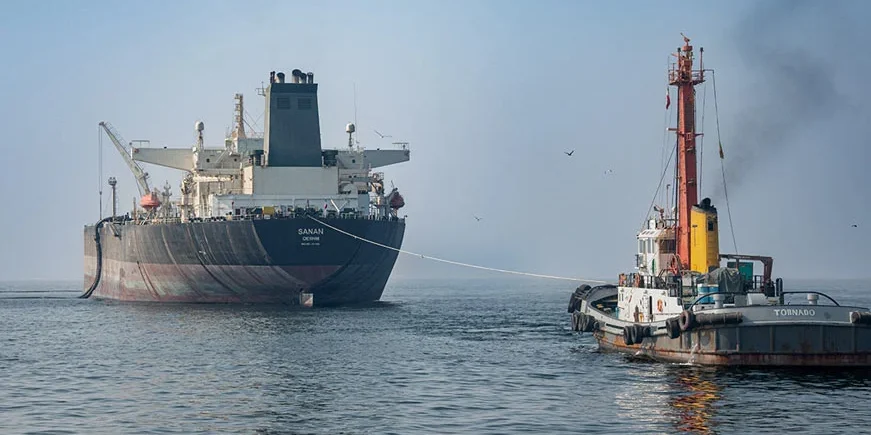
The IMF warns that any effective disruption or closure of the Strait of Hormuz represents one of the most significant risks to global oil supply.
The waterway carries around 25% of global seaborne oil trade, making it a critical chokepoint for international energy markets.
A prolonged interruption could trigger a sharp rise in oil prices and intensify inflationary pressures worldwide. However, the IMF notes that the global economy today is better equipped to absorb such shocks than during the oil crises of the 1970s.
Oil markets currently benefit from relatively strong supply levels, while strategic petroleum reserves in several countries could be deployed to offset short-term shortages.
In addition, global energy efficiency has improved significantly, with each unit of economic output now requiring roughly half the energy it did in 1980.
The global energy mix has also diversified, with oil accounting for less than one-third of total energy consumption, compared to nearly half a century ago.
Despite these structural improvements, vulnerabilities remain uneven across countries. More than 80% of economies are still net oil importers, and those with limited fiscal space are particularly exposed to price shocks.
Rising oil costs can quickly widen budget deficits, increase import bills, and constrain government support for households and businesses.
The IMF concludes that the primary risk is no longer purely global, but highly differentiated.
The ability of individual countries to absorb an energy shock will determine the severity of its economic impact, particularly for import-dependent and fiscally constrained economies.