Angola must invest in electricity exports and prepare for post-oil economy, warns Antonio Costa Silva
Former Portuguese Economy Minister António Costa Silva has urged Angola to urgently accelerate economic diversification and prepare for a post-oil future, warning that declining production from mature oil fields could significantly impact the country’s revenues in the coming years.
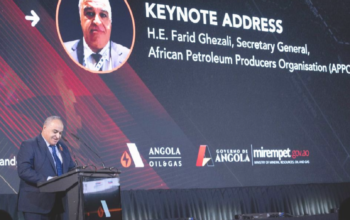
Speaking in Luanda during the presentation of a Deloitte banking sector report, Costa Silva noted that Angola could face an estimated 8% decline in oil production by 2025.
He attributed this to the natural depletion of older oil fields, which are becoming increasingly difficult and costly to exploit.
While he stressed that oil itself is not the problem, he warned that heavy reliance on the sector has historically created rent-driven economic structures that are difficult to sustain over the long term.
Costa Silva argued that Angola’s future growth depends on reducing its dependence on oil and developing alternative export sectors, particularly electricity.
He highlighted significant progress already made in the country’s power sector, noting that installed electricity generation capacity increased from 2.3 gigawatts in 2015 to 6.2 gigawatts by 2022, largely driven by major hydropower investments. The government’s target is to reach 8 gigawatts by 2027.
A key project underpinning this expansion is the Caculo Cabaça hydroelectric dam, with a planned capacity of 2,060 megawatts, which is expected to become the largest hydropower facility in Angola once completed.
Costa Silva emphasised that Angola’s growing electricity capacity could create opportunities beyond domestic consumption.
He noted that Southern Africa faces a regional power deficit of around six gigawatts, creating potential demand for electricity exports.
If Angola retains around three to four gigawatts for internal use, the surplus could be exported, generating a new stream of foreign exchange earnings and reducing reliance on oil revenues.
He also stressed that electricity should be viewed as a foundation for broader economic transformation, particularly through its role in industrial development and agricultural modernisation.
Expanded electrification, he said, including rural electrification, could support productivity growth and open new development pathways across multiple sectors.
However, Costa Silva warned that diversification must be broad-based and balanced. He cautioned against replacing dependence on oil with reliance on another single commodity sector such as diamonds, pointing to risks including market volatility and the growing impact of synthetic diamond production on global demand.
According to him, Angola’s long-term stability depends on building a diversified economic structure that integrates multiple sectors rather than relying on any one industry.
He argued that sustainable development will come from a balanced combination of resources, including energy, agriculture, and industrial production, working together to strengthen the wider economy.