Libya Crude Production Surges to 1.49 Million Barrels as NOC Targets 1.5 Million and Foreign Oil Firms Return
Libya’s oil production has risen to its highest level since 2013, with total crude and condensate output reaching approximately 1.49 million barrels per day.
The milestone strengthens the country’s position among Africa’s leading oil producers as international energy companies gradually return to its upstream sector.
The National Oil Corporation (NOC) reported output of 1,487,723 barrels per day, bringing Libya close to its production target of 1.5 million barrels per day.
Crude production accounted for 1,438,560 barrels per day, while condensate output reached 49,163 barrels per day.
This recovery places Libya alongside major African producers such as Nigeria, Algeria, and Angola, reinforcing the gradual revival of a sector that remains central to the country’s economy.
Libya also holds Africa’s largest proven crude oil reserves, estimated at around 48 billion barrels approximately 41% of the continent’s total, according to the U.S. Energy Information Administration.
Most of these reserves are concentrated in the Sirte and Murzuq basins, making production stability critical for both national revenues and global supply balances.
Sector Recovery and Operational Stability
The announcement was made during a meeting at NOC headquarters in Tripoli, chaired by Chairman Massoud Sulaiman and attended by senior executives and technical directors from operating companies.
Sulaiman described the production achievement as a major milestone for Libya’s oil industry, crediting field workers and technical teams for maintaining output despite operational and logistical challenges.
He added that the NOC’s technical departments continue to monitor operations closely, resolve bottlenecks, and support production sites across the country.
The corporation has indicated plans to further increase output before the end of 2026, aiming to strengthen oil revenues in an economy heavily dependent on hydrocarbons.
Foreign Investment Returns to Libya
Libya’s production recovery has been supported by the gradual return of international oil companies after years of limited engagement.
In February, the NOC awarded exploration blocks in its first licensing round since 2007, attracting companies such as Chevron, Eni, QatarEnergy, Repsol, and Türkiye Petrolleri. The awards covered five blocks out of roughly 20 offered across onshore and offshore basins, including the Sirte and Murzuq regions.
Nigeria’s Aiteo also secured the Murzuq M1 block, marking the participation of an African independent producer in Libya’s renewed exploration drive.
Despite renewed interest, the limited number of awarded blocks reflects continued investor caution amid Libya’s complex political and security environment.
Export Markets and Economic Dependence
Export data from the U.S. Energy Information Administration shows that five European countries led by Italy and Spain accounted for about 71% of Libya’s crude exports during the first nine months of 2025.
Italy alone imported more than 13 million tonnes of Libyan crude, making it one of the country’s largest buyers.
Long-Term Recovery Efforts
Libya’s return to high production levels underscores the resilience of its oil sector more than a decade after the 2011 political upheaval.
Despite institutional divisions, field shutdowns, and infrastructure disruptions, the sector has steadily recovered output and regained investor interest.
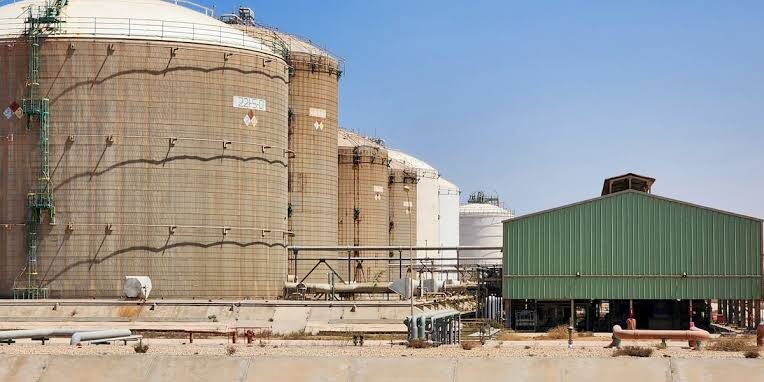
The NOC is also working to restore downstream capacity, including plans to restart the long-idle Ras Lanuf refinery, which has a capacity of 220,000 barrels per day and has been offline since 2013.
Its restart would significantly strengthen domestic fuel supply and expand Libya’s refining capabilities.
As production approaches the 1.5 million barrel-per-day threshold, Libya is positioning itself once again as a key player in global crude markets, while balancing recovery efforts with the need for long-term stability and investment.