Zambia to Launch Lobito Corridor Rail Construction in 2026 to Boost Copper and Cobalt Exports
Zambia’s President Hakainde Hichilema has confirmed that construction of a key railway link connecting the country’s mining regions to Angola’s Port of Lobito will begin later this year, marking significant progress on the Lobito Corridor project.
Speaking on the sidelines of a conference after a meeting with the African Finance Corporation the project’s main promoter Hichilema acknowledged delays but said the project is now ready for implementation.
Key infrastructure project moves forward
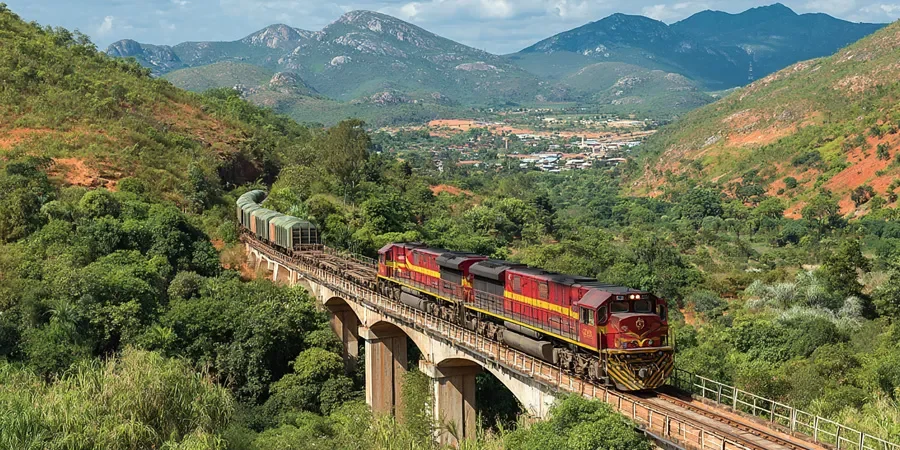
The Lobito Corridor has two main components: the rehabilitation of the existing Benguela railway line in Angola, which connects the Port of Lobito to the Democratic Republic of Congo (DRC), and the construction of a new 800-kilometre railway linking the Angolan border to northwestern Zambia. This new section alone could cost close to €4 billion.
Although trains are already operating on the Angolan section, services remain irregular due to poor infrastructure conditions, including derailments that have disrupted operations.
Strategic role in global supply chains
The corridor is expected to provide Zambia and the DRC with a faster, more cost-effective export route for key minerals such as copper and cobalt.
The United States and the European Union view the project as a strategic initiative to secure access to critical minerals used in electric vehicles, defence, and aerospace industries, while also countering China’s growing influence in Africa.
Boosting regional trade and development
Beyond mining, the Lobito Corridor is expected to strengthen regional integration by reducing transport costs, improving trade flows, and linking landlocked countries in Southern and Central Africa to global markets via the Atlantic Ocean.
The project is also seen as a catalyst for broader economic development along its route, supporting industrial growth and cross-border trade across the region.