UAE OPEC Exit Sparks Supply Uncertainty as Global Oil Market Faces Demand Weakness and Rising Output
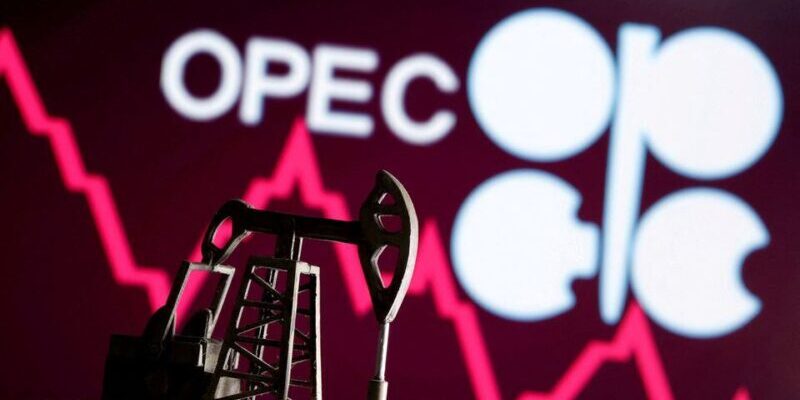
Global oil markets are facing renewed uncertainty following the Organization of the Petroleum Exporting Countries exit announcement by the United Arab Emirates, a move that comes at a time of fragile supply conditions and weakening demand growth.
Abu Dhabi confirmed on April 28, 2026, that it will leave OPEC effective May 1, citing the need for greater flexibility to align production with market conditions and support its long-term energy strategy.
The timing is critical, as shipping routes through the Strait of Hormuz which handles roughly one-fifth of global oil and liquefied natural gas flows remain exposed to geopolitical tensions, adding further risk to already unstable supply dynamics.
According to the UAE Ministry of Energy and Infrastructure, near-term volatility, including disruptions in the Arabian Gulf and the Strait of Hormuz, continues to affect global supply conditions.
However, the ministry noted that medium- to long-term demand trends still point to steady global energy consumption growth.
“A stable global energy system depends on flexible, reliable, and affordable supply. The UAE has invested to meet evolving demand efficiently and responsibly, prioritizing stability, affordability, and sustainability,” the statement said.
Market Pressure Builds
The UAE’s exit adds pressure to an already fragile oil market. OPEC+ led by Saudi Arabia has maintained production cuts since mid-2023 in an effort to support prices, but gains have been limited, with Brent crude still trading below previous highs.
At the same time, global demand growth remains subdued. Oil consumption increased by only about 0.65 million barrels per day in 2025 and is projected to stay below 1 million barrels per day in 2026, weighed down by weaker demand from China and broader global economic headwinds.
On the supply side, production is rising more quickly. Global output is expected to grow by around 2.4 million barrels per day, driven mainly by non-OPEC producers such as the United States, Brazil, and Guyana. This expansion is gradually eroding OPEC+’s influence over global pricing.
As a low-cost, high-capacity producer, the UAE’s departure weakens coordinated supply management and could increase competitive production behavior among major exporters.
Impact on African Oil Economies
The implications are particularly significant for African oil-dependent economies such as Nigeria, Angola, Algeria, and Libya.
These countries remain heavily reliant on hydrocarbons for export earnings and government revenue.
Nigeria depends on oil for a substantial share of foreign exchange inflows, Angola relies on crude exports for the bulk of its revenue, while Algeria and Libya face similar structural vulnerabilities.
Energy analyst Isa Yusibov noted that the UAE’s exit could intensify competition among producers: “The UAE’s exit ushers in a market share war. As additional supply enters the market, other producers may feel pressure to exceed quotas to maintain revenues, potentially contributing to long-term downward pressure on prices.”
African producers also face structural disadvantages, including higher production costs, aging infrastructure, and limited upstream investment.
With OPEC+ cohesion weakening and non-member output increasing, these economies are becoming more exposed to price volatility rather than coordinated market stability.
Shift Toward a More Fragmented Market
Analysts warn that the global oil market is transitioning from a coordinated supply management system toward a more fragmented and competitive structure.
In this environment, price stability becomes harder to maintain, and fiscal planning for oil-dependent economies becomes more uncertain.
For many African exporters, this shift could translate into tighter public finances, reduced government spending capacity, and increased pressure on national currencies.
In effect, the UAE’s departure from OPEC underscores a broader transformation in global energy markets one defined less by collective production control and more by competition, flexibility, and volatility.