OPEC+ Maintains Oil Production Levels Through Q1 2026 Despite Global Political Turmoil
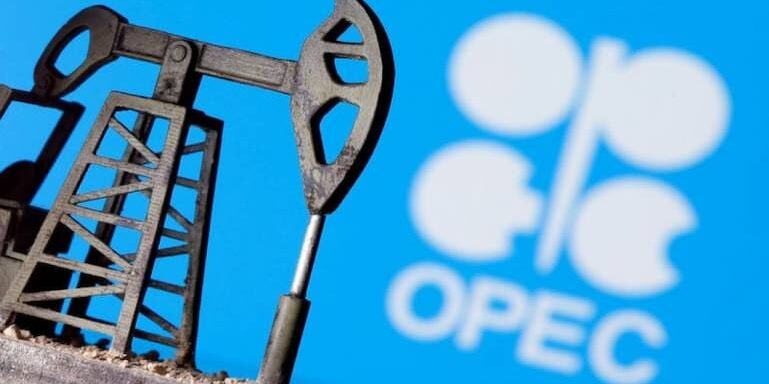
OPEC+ agreed to maintain current oil production levels on Sunday after a brief meeting of key producing nations, reaffirming its decision to keep output unchanged through the first quarter of 2026.
The alliance’s members deliberately avoided substantive discussion of ongoing political crises affecting some member states.
The virtual meeting involved eight major OPEC+ producers — Saudi Arabia, Russia, the United Arab Emirates (UAE), Kazakhstan, Kuwait, Iraq, Algeria, and Oman — which together account for about half of global oil supply.
Their decision follows a steep decline in oil prices in 2025, with Brent and other benchmarks falling more than 18% over the year amid rising concerns about oversupply.
The group reiterated its November 2025 agreement to pause production increases in January, February, and March due to seasonal demand patterns and broader market conditions.
This pause is intended to support price stability by keeping output at December 2025 levels, even as seasonal demand remains subdued.
Market analysts noted the unusual backdrop for the decision, as political tensions rise in multiple regions. Recent disputes between Saudi Arabia and the UAE over the conflict in Yemen have strained relations within the Gulf, creating uncertainty among producers. Meanwhile, geopolitical shocks — including the U.S. capture of Venezuelan President Nicolás Maduro and subsequent developments in Caracas — have added to volatility in energy markets.
allAfrica.com
Despite these pressures, OPEC+ emphasised that its policy focus remains on monitoring market fundamentals and exercising flexibility in future supply adjustments. The group signalled that it could reinstate previously agreed voluntary production cuts, in whole or in part, depending on evolving market dynamics.
OPEC+ has scheduled its next meeting for February 1, 2026, where members are expected to review market conditions and assess whether to maintain current production stances or adjust output targets.
Industry observers say the decision to hold output steady reflects a cautious approach amid weak demand signals and lingering oversupply risks from rising non‑OPEC production.
By maintaining a predictable supply framework, the alliance aims to balance global market stability with long‑term strategic interests.