
Lobito Refinery Set to Begin Production in 2027 as Sonangol Prioritizes Strategic Energy Infrastructure
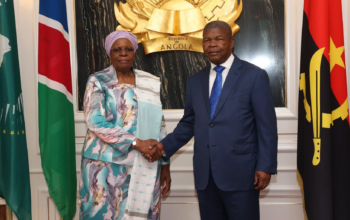
The construction of the Lobito refinery is a top priority for Sonangol, according to the Minister of Mineral Resources, Petroleum and Gas, Diamantino Azevedo.
The minister made the statement during a meeting with the Governor of Benguela, Manuel Nunes Júnior, where progress on the project was reviewed.
Speaking at the meeting, Diamantino Azevedo reiterated the strategic importance of the refinery, emphasizing the role of energy infrastructure in diversifying Angola’s economy and reducing dependence on imported fuels.
According to a statement from the Benguela Provincial Government, accessed by VerAngola, the minister also revealed that Sonangol has been instructed to conduct petrochemical studies aimed at establishing a petrochemical hub linked to the Lobito refinery.
The statement further notes that production at the refinery is scheduled to begin in 2027, when the facility is expected to start supplying petroleum derivatives to the domestic market.
On the mining sector, Diamantino Azevedo announced that a legal decree is being prepared to improve coordination between the Ministry of Mineral Resources, Petroleum and Gas and provincial governments in the process of granting mining rights.
The minister also highlighted the importance of the Digital Mining Registry, stating that it will help streamline concession processes and strengthen oversight of mining activities.
The meeting, held on Tuesday, included a briefing by the Governor of Benguela, who underlined the progress made in the construction works of the Lobito refinery.
During the session, the National Agency for Mineral Resources (ANRM) presented an overview of mining titles issued in Benguela Province.
A total of 32 mining titles and licenses for prospecting and exploration have been granted, primarily covering quartz, gypsum, limestone, and granite. Of these, 20 are in the prospecting phase and 12 are in exploration.
The Geological Institute of Angola (IGA) also presented an assessment of the province’s geological potential, highlighting the presence of limestone, quartzite, copper, lead, granite, clay, mica, rare earth elements, fluorite, manganese, and gypsum.
In the downstream petroleum sector, the Petroleum Derivatives Regulatory Institute (IRDP) reported that Benguela Province has a total storage capacity of 111,531 cubic meters of petroleum derivatives. Of the 104 fuel stations in the province, 86 are currently operational.
The Director General of IRDP, Luís Fernandes, noted that several newly created municipalities still lack fuel stations, describing this gap as a clear investment opportunity for private operators.
He also identified additional opportunities in the development of gas distribution networks and branches, the sale of lubricants, and the production and refurbishment of gas cylinders.