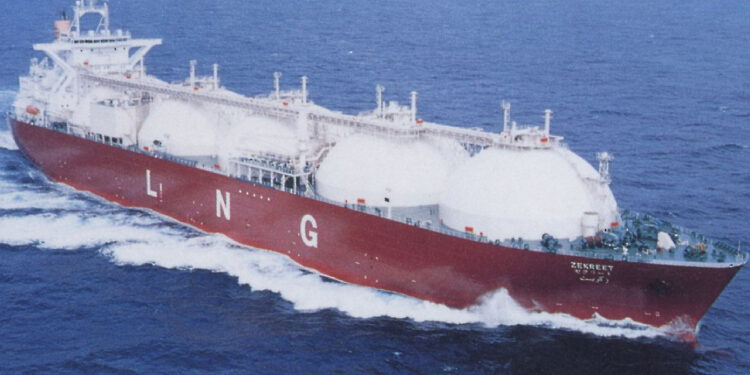
Egypt has finalized agreements with several major energy companies and global trading houses to purchase 150–160 cargoes of liquefied natural gas (LNG) through 2026, as the country races to secure fuel for its power grid amid deepening energy and economic challenges.
Valued at more than $8 billion based on current market prices, the LNG procurement underscores the growing financial strain on Egypt’s government, already grappling with falling domestic gas production, a foreign currency shortage, and a worsening cost-of-living crisis.
The deals involve leading global players including Saudi Aramco, Shell, Vitol, Trafigura, BGN, SOCAR, and PetroChina.
Of the total contracted cargoes, 50–60 shipments will be used to meet electricity demand in 2025, in addition to the 75 cargoes acquired earlier in 2024. The remaining volumes are scheduled for delivery by the end of 2026.
Each shipment is priced at a premium of $0.70–$0.75 per MMBtu above the Dutch TTF hub benchmark, with payment deferred for nine months—a key feature likely aimed at easing immediate fiscal pressure.
The agreements reportedly allow Egypt the flexibility to delay shipments, while some suppliers may also offer additional cargoes if local demand surges.
Officials from Egypt’s Ministry of Petroleum and the Egyptian Natural Gas Holding Company (EGAS) have not yet commented on the terms of the agreements.
Egypt’s energy woes have been escalating since 2022, with rolling power outages becoming a regular occurrence due to a sharp decline in natural gas output.
In February 2025, domestic gas production fell to a nine-year low, forcing Egypt to shift from its brief role as a gas exporter back to a net importer—derailing previous plans to supply European markets.
According to S&P Global Commodity Insights, Egypt has already imported 1.84 million tons of LNG in 2024, amounting to approximately 75% of its expected total imports for the year.
A Fragile Balancing Act
While the newly signed LNG deals may stabilize electricity supply in the near term, they also deepen Egypt’s dependence on costly energy imports at a time of severe fiscal pressure.
With delayed payments to international oil firms and shrinking investment in exploration, the country faces a difficult path toward energy self-sufficiency and economic recovery.
The LNG purchases may offer a short-term fix, but without significant reforms and domestic production growth, Egypt’s energy and financial challenges are likely to persist well beyond 2026.