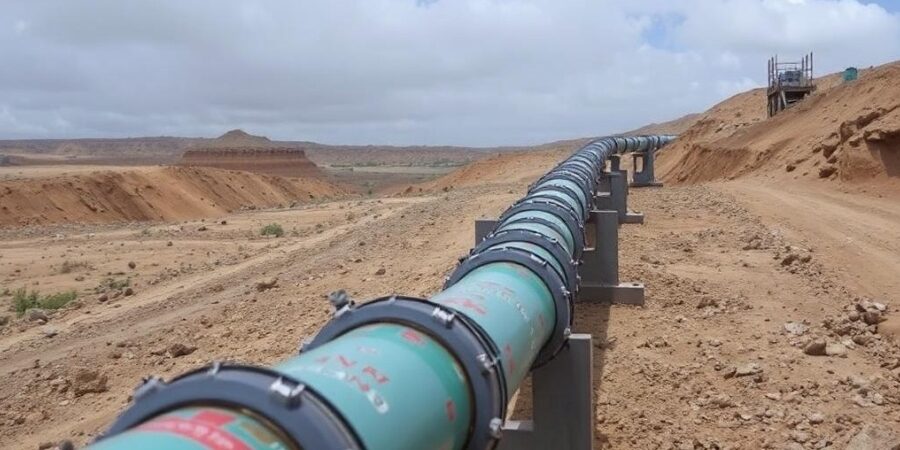
Nigeria–Morocco Gas Pipeline: Europe Eyes West African Gas as Alternative Energy Corridor by 2031
Nigeria-led gas exports to Europe are drawing renewed attention as the Nigeria–Morocco Gas Pipeline project gathers momentum.
The ambitious initiative is positioning itself as a potential energy corridor linking West Africa to European markets by 2031.
Anchored on Nigeria’s vast natural gas reserves, the proposed pipeline is expected to traverse 13 countries along the Atlantic coast.
Emerging gas producers such as Senegal and Mauritania are also anticipated to contribute to supply, strengthening the project’s regional significance.
Recent global energy disruptions have further underscored the importance of alternative supply routes.
Tensions affecting key shipping lanes, including the Strait of Hormuz, have contributed to sharp increases in energy prices across multiple markets, prompting European nations to accelerate efforts to diversify their energy sources.
In response to this shifting landscape, Morocco’s state energy company, ONHYM, has initiated a formal fundraising process to secure financing for the multi-billion-dollar project.
This marks a critical step toward advancing the pipeline from concept to execution.
The vision of a trans-African pipeline connecting Nigeria to Morocco and ultimately to Europe has been in development for nearly a decade.
It was first announced in 2016 during King Mohammed VI of Morocco’s visit to Nigeria, where discussions with then-President Muhammadu Buhari laid the groundwork for bilateral cooperation.
Soon after, feasibility studies were launched, estimating the project cost at approximately $25 billion.
Despite its strategic appeal, the scale and complexity of the project have led some critics to question its feasibility.
Spanning roughly 7,000 kilometers and requiring integration with existing European gas infrastructure via Spain, the pipeline represents one of the most ambitious energy projects on the continent.
However, its potential impact remains significant. For Europe, the pipeline offers a pathway to reduce reliance on traditional suppliers, including Russia, while mitigating exposure to volatility linked to Middle Eastern supply disruptions.
For West Africa, it presents an opportunity to monetize gas reserves, deepen regional integration, and expand participation in global energy markets.
Importantly, foundational steps have already been taken. Nigeria and Morocco signed agreements to advance the Front-End Engineering Design (FEED) phase in 2018, signaling commitment from both sides to move the project forward.
The pipeline is expected to transport up to 30 billion cubic meters of gas annually. While this exceeds Nigeria’s current export capacity, the projected timeline provides a window for infrastructure development and production scaling.
With first gas targeted for 2031, stakeholders have several years to align capacity with anticipated demand.
If successfully executed, the Nigeria–Morocco Gas Pipeline could redefine energy trade between Africa and Europe, establishing a new corridor that enhances supply security while unlocking economic opportunities across the region.