Nigeria Cuts Petrol Imports as Dangote Refinery Meets 92% of Fuel Demand
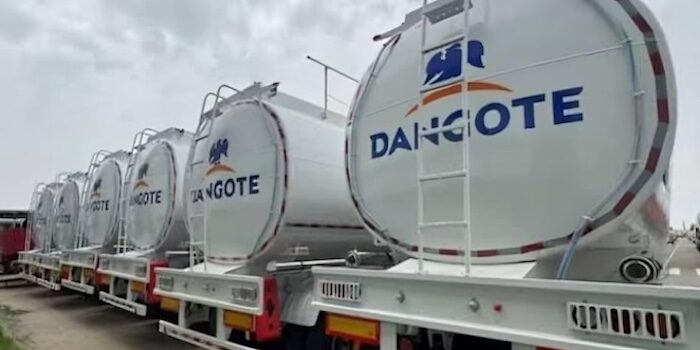
Nigeria recorded a sharp decline in petrol imports in February as the Dangote Refinery significantly boosted domestic fuel supply, meeting approximately 92% of the country’s demand.
According to an official factsheet on Nigeria’s midstream and downstream petroleum operations, total petrol supply dropped from 64.9 million litres per day in January to 39.6 million litres per day in February.
The decline reflects reduced reliance on imports as local refining capacity continues to expand.
Imports fell to their lowest level on record, with only about 3.1 million litres of petrol brought into the country daily accounting for just 8% of total supply.
This marks a 39.1% decrease in overall supply, equivalent to a reduction of 25.4 million litres per day during the period.
Dangote Refinery Drives Supply Shift
The Dangote Refinery, Africa’s largest oil refinery, supplied the bulk of domestic fuel during the month, reshaping Nigeria’s downstream market.
Despite some operational challenges across smaller facilities, local refining played a dominant role in meeting national demand.
Domestic refineries collectively produced an average of 8.2 million litres per day, while three modular refineries contributed an additional 0.368 million litres daily.
Even with the overall decline in supply, Nigeria maintained a petrol sufficiency level of 31 days, indicating adequate reserves to meet demand for about a month. Average daily consumption stood at 36.6 million litres, slightly below total supply.
However, broader consumption trends remained strong. Truck-out volumes showed actual usage averaging 56.9 million litres per day about 13.8% above the national benchmark of 50 million litres per day.
Policy Shift Supports Local Refining
The rise in domestic production reflects a broader policy shift by Nigerian authorities to prioritize local refining.
The government recently suspended gasoline import licenses, allowing imports only when domestic supply falls short.
Oil marketing firms, including units of TotalEnergies, Conoil Plc, and MRS Nigeria Plc, which together accounted for roughly 25% of imports in January, were affected by the suspension.
According to George Ene-Ita, spokesperson for the Nigerian Midstream and Downstream Petroleum Regulatory Authority (NMDPRA), current local production levels are sufficient to meet demand, eliminating the need for imports.
Structural Shift in Nigeria’s Energy Sector
The growing contribution of the Dangote Refinery signals a structural transformation in Nigeria’s downstream petroleum sector.
As domestic refining capacity increases, the country is steadily reducing its dependence on imported fuel, strengthening energy security and reshaping market dynamics.