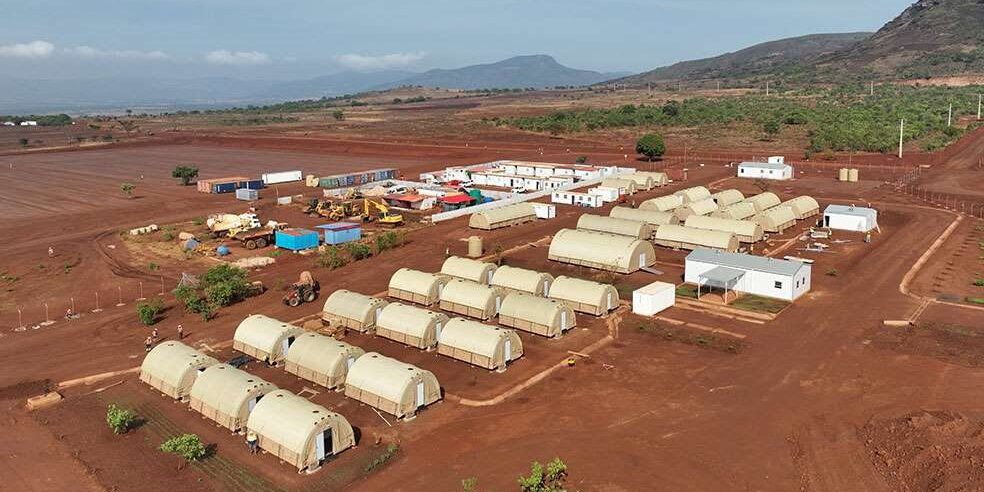
Angola Secures $165M Investment for Longonjo Rare Earth Project, Boosting Africa’s Strategic Supply Chain
Mining company Pensana has secured a $165 million strategic equity investment from rare earth-focused investment platform Cascade Natural Resources to accelerate its Longonjo rare earth project in Angola.
This funding unlocks a complementary $160 million debt package supported by the U.S. Export-Import Bank (EXIM), positioning the project on track for its 2027 production target and enabling a broader capital plan exceeding $325 million for fully integrated rare earth production.
Angola is pioneering a new model of mineral diplomacy by leveraging the Lobito Corridor to reduce dependence on Chinese rare earth processing.
As prices for high-demand magnet metals continue to rise, African countries are increasingly positioning themselves as reliable suppliers to Western high-tech and defense industries.
However, whether this emerging African “magnet shield” can compete with Beijing’s pricing strategies remains uncertain.
Breaking the Monopoly: Angola’s Midstream Sovereignty
Rising neodymium-praseodymium prices have strengthened the business case for non-Chinese supply. Traditionally, African producers exported raw ore for overseas processing.
Pensana, however, is pursuing an integrated model to supply advanced manufacturing and defense supply chains directly, including a proposed offtake agreement with Toyota Tsusho, the trading arm of the Toyota Group.
The $160 million U.S. EXIM Bank debt package underpins this strategy, reflecting a broader policy push to secure critical mineral supply chains for American manufacturing.
A planned heavy rare earth recovery facility will process elements such as dysprosium and terbium within a transparent, Western-aligned framework, mitigating the risk of future export restrictions.
Angola is also differentiating its output through a potential “green premium.” By powering the Longonjo facility with low-cost hydroelectric energy from the Luaca Dam, the project reduces the carbon footprint of rare earth oxide production a key factor for EV manufacturers and data centers increasingly focused on ESG compliance.
With an initial production target of 20,000 tons of rare earth carbonate annually, the Longonjo project anchors the Lobito Corridor, a rail-integrated logistics model that could reduce transport costs by approximately 30%, strengthening resilience against commodity cycles and maintaining price competitiveness
Other African projects are reinforcing this regional shift:
South Africa – The Steenkampskraal mine boasts a world-leading 14.5% total rare earth oxide grade, supporting lower production costs and offering resilience against aggressive pricing strategies historically used to marginalize new entrants.
Malawi – The Songwe Hill project is feeding a dedicated separation plant in Poland, creating a “mine, refine, recycle” loop that bypasses Asian processing hubs and strengthens the EU’s supply of neodymium and praseodymium.
Uganda – The Makuutu project targets ionic adsorption clay deposits, a critical source of heavy rare earths. These materials are essential for high-performance magnets used in advanced defense systems, particularly as U.S. legislation mandates eliminating Chinese-origin magnets from frontline hardware by 2027, accelerating demand for alternative suppliers.
Collectively, these projects mark a strategic pivot for Africa, positioning the continent as a critical player in the global rare earth market while advancing sustainable, Western-aligned production.