Halliburton Wins Shell Contract for HI Gas Project to Boost Nigeria’s LNG Supply
Halliburton has announced that the Shell Nigeria Exploration and Production Company (SNEPCo) has awarded it a major contract to deliver integrated drilling services for the HI gas project, located in the shallow waters of OML 144 off the Niger Delta coast.
The Houston-based oilfield services company said it will deploy remote operations and automated drilling technologies to enhance safety, reduce operational costs, and accelerate project timelines.
These digital and automation-driven methods have become standard among international drillers as the industry pushes for greater efficiency in complex offshore developments.
Shell approved the HI gas development in mid-October, holding a 40% stake in the project, while Sunlink Energies & Resources, a local Nigerian partner, owns the remaining 60%.
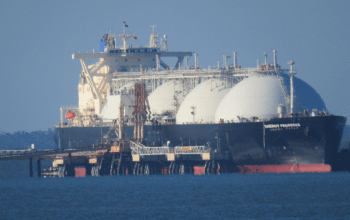
Once operational, the project is expected to produce up to 350 million cubic feet of natural gas per day for delivery to the Nigeria LNG (NLNG) plant on Bonny Island.
The gas will help supply the long-awaited Train 7 expansion, led by a consortium headed by Italy’s Saipem.
Production from the HI project is projected to begin before the end of the decade, according to sources familiar with the plan.
The contract underscores renewed confidence in Nigeria’s energy sector, as the government works to revive offshore investment and boost natural gas production.
Despite holding Africa’s largest natural gas reserves, Nigeria’s gas development has lagged due to infrastructure deficits, regulatory uncertainties, and years of underinvestment.
For Shell, the HI project aligns with its long-term strategy to focus on natural gas and LNG as key components of its global energy portfolio.
The company already holds a 25.6% stake in the Bonny Island LNG complex, alongside the Nigerian National Petroleum Company (NNPC), TotalEnergies, and Eni.
Gas from the HI project will enhance feedstock availability for Train 7, a critical NLNG expansion that aims to increase total liquefaction capacity by more than 30%.
The expansion, however, has faced repeated delays stemming from pandemic-related disruptions, financing constraints, and contractor challenges.
Nigeria’s government is advancing its “Decade of Gas” initiative to bring more gas to market—targeting reduced gas flaring, increased domestic power generation, and expanded export capacity.
Earlier this year, President Bola Tinubu announced new policy incentives, including potential tax relief for gas investments, to attract fresh capital from international energy companies.
Halliburton’s involvement also highlights the growing adoption of automation and remote operations in offshore projects, particularly in regions where logistics and on-site support remain difficult.
The company has long advocated for automation as a means of reducing personnel exposure in high-risk environments while improving performance.
If completed successfully, the HI gas project will deliver a significant boost to Nigeria’s LNG exports at a time when global demand for gas diversification especially in Europe continues to rise amid geopolitical uncertainty.