DRC’s 22 Billion-Barrel Oil Potential Remains Largely Untapped as Government Pushes Hydrocarbon Development
The Democratic Republic of Congo (DRC) is currently exploiting only a small fraction of its vast hydrocarbon potential, despite estimated reserves of 22 billion barrels of oil and 66 billion cubic metres of gas across its major sedimentary basins.
According to Joseph Twite Maloba, President of the Professional Committee of Petroleum Companies of the Federation of Enterprises of Congo (FEC South) and Vice-President of the National Hydrocarbons Commission of the FEC, the country is using only about 4.5% of its hydrocarbon resources, with production largely limited to the Moanda oil fields operated by Perenco Rep in Kongo Central Province.
Speaking on 23 July 2026 during the opening of the first Hydrocarbons Conference held at the Karavia Hotel in Lubumbashi, Twite Maloba said national oil production has remained stagnant for nearly two decades, averaging around 25,000 barrels per day.
He described hydrocarbons as a strategic pillar of the Congolese economy alongside mining but warned that the sector remains significantly underdeveloped compared with neighbouring countries that share similar geological resources.
DRC’s Three Major Hydrocarbon Basins
Twite Maloba highlighted three major hydrocarbon basins that represent the country’s main exploration opportunities.
The Coastal Basin, located in Kongo Central along the Atlantic coastline, contains the DRC’s only active oil production.
Covering approximately 5,992 square kilometres, it includes both onshore and offshore areas.
The Western Branch of the East African Rift Basins covers around 55,600 square kilometres and includes the Albertine Graben in Ituri Province, the Tanganyika Graben and the Lake Kivu Basin, which is known for significant methane gas resources.
The largest is the Central Basin, extending across approximately 750,000 square kilometres along the Congo River and its tributaries.
The basin covers several provinces, including parts of former Equateur, Bandundu, Kasai, Maniema and Orientale regions, representing one of Africa’s most significant unexplored sedimentary formations.
Developing the Full Hydrocarbon Value Chain
During his presentation, Twite Maloba also outlined the structure of the petroleum industry value chain, which is divided into three main segments.
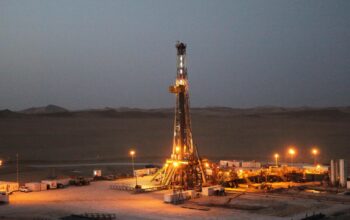
The upstream sector focuses on exploration and production activities, including geological surveys, seismic studies and the identification of potential oil and gas deposits.
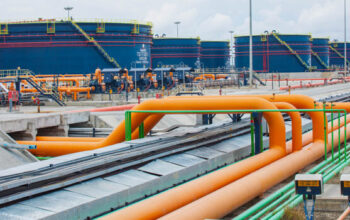
The midstream sector involves the transportation, storage and logistics required to move crude oil and petroleum products from production sites to processing facilities and export terminals.
The downstream sector covers refining, distribution, marketing and petrochemical activities, which are essential for creating additional economic value from hydrocarbons.
Twite Maloba stressed that unlocking the DRC’s hydrocarbon potential will require increased investment in exploration, infrastructure development and the creation of a supportive regulatory environment.
With growing global demand for energy resources and the need to diversify its economy beyond mining, the DRC is seeking to position its oil and gas sector as a new driver of economic growth while attracting responsible investment into its largely untapped reserves.