Uganda has signed a trilateral agreement with Tanzania and Zanzibar to strengthen regional cooperation in regulating the oil and gas sector.
The move supports Uganda’s goal of producing its first oil by 2026, even as uncertainty persists over the timeline for its long-delayed refinery project.
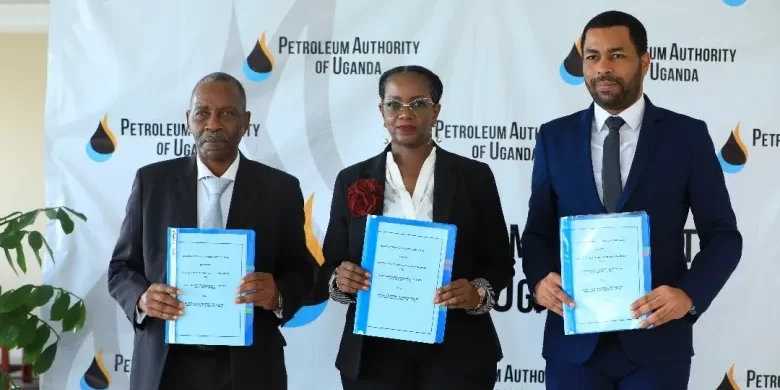
The agreement unites Uganda’s Petroleum Authority, Tanzania’s Petroleum Upstream Regulatory Authority (PURA), and the Zanzibar Petroleum Regulatory Authority (ZPRA) in a coordinated effort to enhance petroleum development across East Africa.
Key focus areas of the deal include harmonizing regulatory standards, managing resources more efficiently, reducing operational costs, ensuring environmental compliance, promoting local content, and building technical expertise.
At the signing ceremony, Lynda Biribonwa, Chairperson of Uganda’s Petroleum Authority, described East Africa as a promising frontier for oil and gas investment.
She emphasized the importance of regional regulators working together to share knowledge and attract sustainable investment.
The new Memorandum of Understanding formalizes years of informal collaboration, particularly between Uganda and Tanzania.
Both nations are partners in the $5 billion East African Crude Oil Pipeline (EACOP), designed to transport Ugandan oil to international markets via the port of Tanga in Tanzania.
PURA Board Chair, Halfani R. Halfani, noted that the agreement will facilitate the exchange of best practices and bolster long-term investment readiness.
ZPRA Managing Director Muhammed S. Said added that consolidating regulatory expertise is vital to advancing East Africa’s broader energy goals.
The signing comes amid increased scrutiny of Uganda’s domestic oil infrastructure. In March, the Ugandan government signed a deal with UAE-based Alpha MBM Investments to build a refinery in Hoima capable of processing 60,000 barrels of crude oil per day.
Under that agreement, Alpha MBM will hold a 60% stake in the refinery, with the remaining 40% owned by Uganda’s National Oil Company.
However, critical project agreements remain pending, and construction has not yet begun. If the refinery is delayed further, Uganda may have no choice but to export all its crude oil through the pipeline when it becomes operational.
While the government remains committed to a 2026 production start, experts have cautioned that any additional delays could undermine investor confidence and delay revenue generation.
PURA Director General Charles J. Sangweni revealed that discussions for the trilateral agreement had been ongoing for nearly a year.
He also indicated that future collaboration could extend to other East African countries, including Kenya.
This week, delegations from Tanzania and Zanzibar are set to visit Uganda’s oil fields in the Albertine Graben to observe the country’s production readiness.
Sangweni described the agreement as a foundation for deeper technical cooperation across the region. Uganda currently estimates its recoverable oil reserves at 1.4 billion barrels.
Once completed, the Hoima refinery is expected to reduce Uganda’s dependence on imported petroleum and increase local economic benefits.
Officials at the signing ceremony stressed the power of collaboration and echoed the Swahili proverb “Umoja ni nguvu”—unity is strength.
Biribonwa concluded the event by urging all parties to shape a new, united future for East Africa’s oil and gas industry.