Nigeria Imports 71% of Petrol Despite $20 Billion Dangote Refinery, Intensifying FX Pressure
Despite the launch of the $20 billion Dangote Petroleum Refinery in Lekki, Nigeria continues to rely heavily on imported refined petroleum products.
According to recent data from the Nigerian Midstream and Downstream Petroleum Regulatory Authority (NMDPRA), fuel marketers imported 71.38% of Nigeria’s petrol supply in May and June 2025, leaving just 28.62% sourced from domestic refining.
This import-heavy approach comes at a time when Nigeria is grappling with a serious foreign exchange (FX) crisis.
Instead of supporting domestic refining capacity, marketers are spending scarce foreign currency on overseas petroleum products—undermining one of the key objectives behind local refinery development: reducing import dependency and strengthening energy security.
Aliko Dangote, Africa’s richest man and Chairman of the Dangote Group, recently urged the federal government to ban the importation of petrol, diesel, and other refined products.
According to him, the unchecked importation of low-cost, often substandard fuel is sabotaging the viability of local refineries.
“The ‘Nigeria First’ policy announced by His Excellency, President Bola Tinubu, should apply to the petroleum sector just like any other,” Dangote stated in July.
“We are now facing increased dumping of cheap, often toxic petroleum products—many of which are substandard and wouldn’t be allowed in Europe or North America.”
He argued that local refineries, including his own state-of-the-art facility, are being financially squeezed as they struggle to compete with cheaper, lower-quality imports.
This clash between domestic producers and fuel importers has triggered a price war across retail outlets.
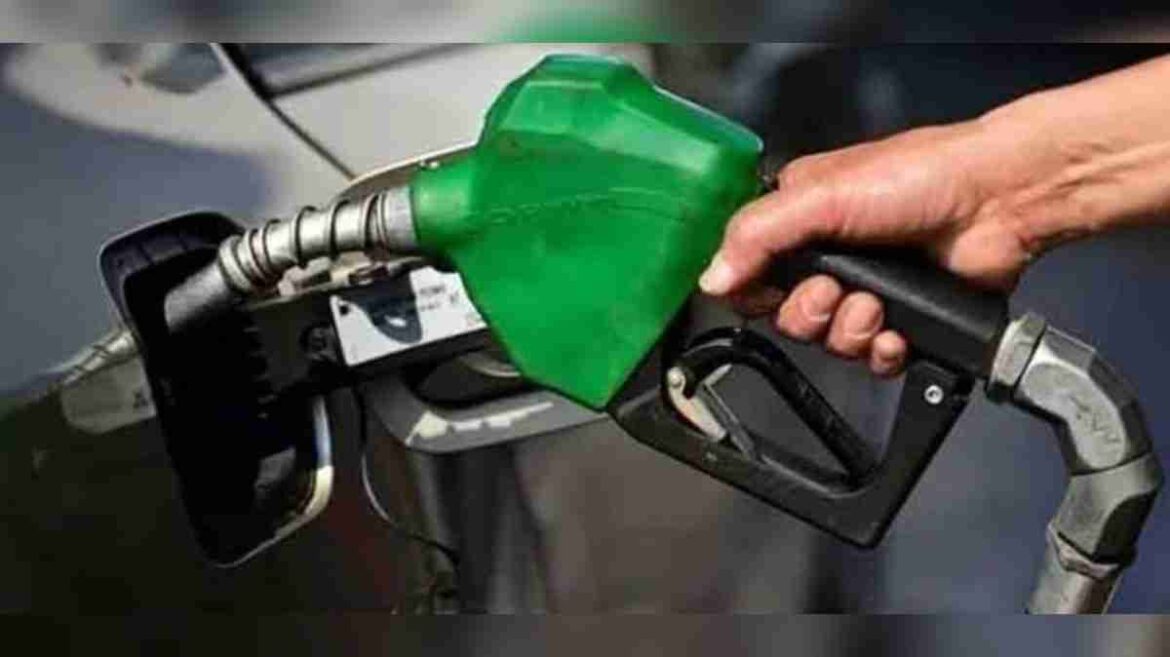
In states like Lagos and Ogun, some independent filling stations are selling petrol for under ₦860 per litre—lower than the ₦865–₦875 range set by Dangote-affiliated marketers like MRS and Heyden.
Meanwhile, importers such as Aiteo and Menj have slashed their depot prices to ₦815 per litre, beating Dangote’s N820 offer.
In early July, the Dangote Refinery responded by reducing its ex-depot price of Premium Motor Spirit (PMS) from ₦880 to ₦840 per litre in a bid to stay competitive.
According to a Federation Accounts Allocation Committee (FAAC) document obtained by The Punch, Nigeria imported 2.32 billion litres of petrol during May and June. Local refineries, by contrast, supplied just 927 million litres during the same period.
Here’s a breakdown:
June 2025:
Imported: 1.023 billion litres (34.10 million litres/day)
Locally refined: 455.2 million litres (15.2 million litres/day)
May 2025:
Imported: 1.297 billion litres (43.22 million litres/day)
Locally refined: 472.07 million litres (15.74 million litres/day)
Distribution data also showed that 455.2 million litres were trucked directly from refineries, while 985.6 million litres came from depots—an 18.55% increase over May’s 1.22 billion litres.
However, the total national supply dropped by 16.42% from 1.77 billion litres in May to 1.48 billion litres in June.
Daily distribution averaged 54 million litres in May and 48 million litres in June, with the number of delivery trucks decreasing from 37,000 to 32,000 during the same period.
With an average pump price of ₦905 per litre, marketers spent an estimated ₦2.1 trillion on fuel imports during May and June alone—further straining Nigeria’s FX reserves.
The current imbalance between domestic production and imports not only undermines investments in local refining infrastructure but also exposes Nigeria to global fuel market volatility and continued pressure on its currency.