Nigeria Positions Itself as a Strategic Alternative in Global Oil Supply Amid Middle East Tensions
Faced with persistent geopolitical tensions in the Middle East, Nigeria is seeking to strengthen its role in the global supply of oil and gas.
As Africa’s leading crude oil producer, the country is positioning itself as a credible alternative to help diversify hydrocarbon sources on international markets.
In a recent media appearance, Nigerian Foreign Minister Yusuf Maitama Tuggar called on Gulf producers to consider Nigeria a strategic partner and to increase investments in the country’s energy sector.
For Abuja, the challenge is twofold: attracting capital to develop still underexploited resources and expanding production capacity to reinforce its position in global energy markets.
“Countries that might consider us competitors can also become partners by investing in Nigeria to diversify their market share,” the Nigerian foreign minister said.
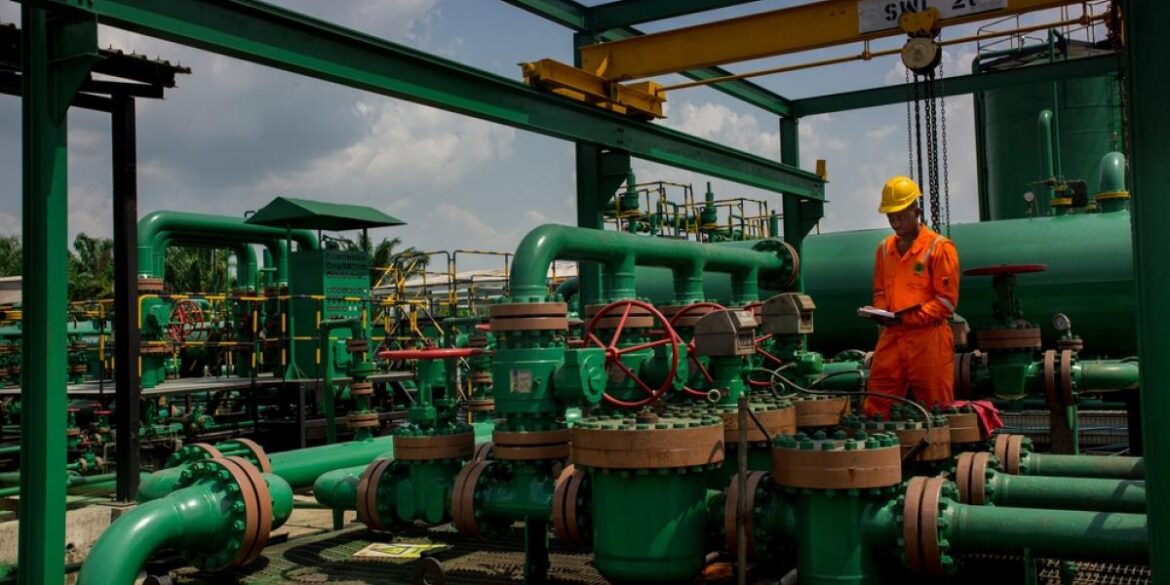
To support this ambition, Nigerian authorities are prioritizing the exploration of new oil deposits, the modernization of existing infrastructure, and the expansion of gas development projects.
According to data published in February 2026 by the Nigerian Upstream Petroleum Regulatory Commission (NUPRC), the country’s oil sector generated 55.5 trillion naira in gross revenue in 2025 (approximately $37 billion), compared with 50.88 trillion naira (nearly $34 billion) in 2024.
The performance was supported by an average production of 1.45 million barrels per day and an average oil price of $72.08 per barrel.
Nigeria’s strategy also comes at a time of heightened tensions around the Strait of Hormuz, a critical maritime corridor through which nearly one-fifth of the world’s oil supply passes, according to the U.S. Energy Information Administration. Any disruption in this region tends to increase global interest in alternative sources of supply.
Against this backdrop, Abuja is stepping up efforts to attract international partners. Nigeria signed a comprehensive economic partnership agreement with the United Arab Emirates in January aimed at boosting bilateral investment.
At the same time, investors linked to Qatar have announced several initiatives in Nigeria’s gas sector.
With average production estimated at 1.64 million barrels per day during the first eleven months of 2025, Nigeria has set an ambitious target: doubling its oil output by 2030 and consolidating its position as a major player in the global energy market.