Namibia Joins Luanda Accord; India’s GJEPC and Dubai’s DMCC to Become Natural Diamond Council Members
Namibia has formally signed the Luanda Accord, becoming the latest government to commit funding to support global marketing of natural diamonds through the Natural Diamond Council (NDC).
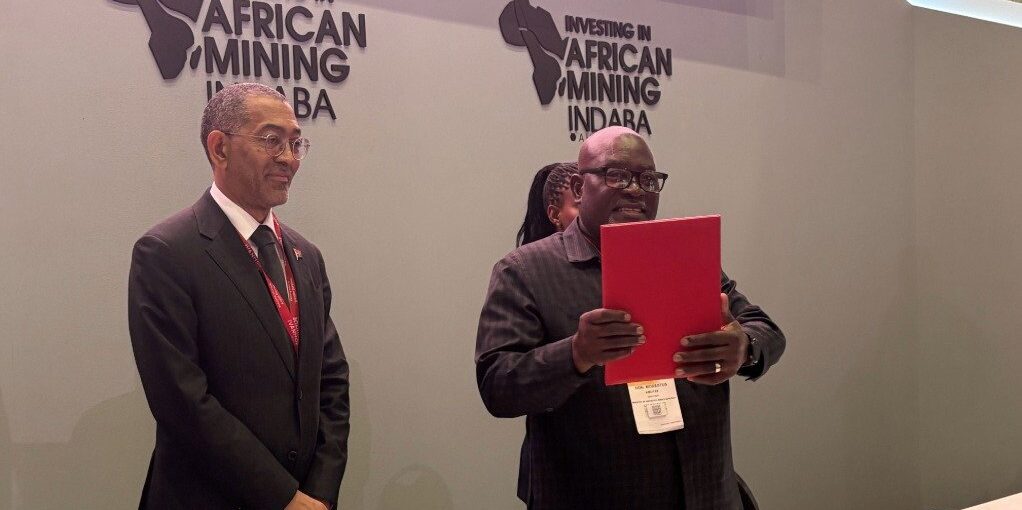
The announcement was made during the second high-level meeting of the Luanda Accord, held at the 2026 Investing in African Mining Indaba in Cape Town.
Established in June 2025, the accord seeks to coordinate funding from African diamond-producing nations to promote natural diamonds amid declining prices and rising competition from synthetic alternatives.
Namibia joins existing signatories Angola, Botswana and the Democratic Republic of the Congo (DRC). By signing, Namibia commits to contribute 1% of its annual revenue from rough diamond sales to support NDC marketing initiatives.
With a diamond industry dating back to 1908, Namibia is currently the world’s fifth-largest diamond producer by value.
The Luanda Accord was initially signed in 2025 by Angola, Botswana, South Africa, Namibia, Sierra Leone, the DRC and De Beers, the largest diamond producer in Africa and the second-largest globally.
However, South Africa has yet to make its financial contribution. Because rough diamond production and sales are licensed to private companies rather than managed directly by the State, the government must secure industry support and Cabinet approval before committing funds.
Khumbudzo Ntshavheni stated in August 2025 that Cabinet had approved a request for the domestic diamond industry to contribute 1% of annual rough diamond sales revenue to promote natural diamonds.
The proposal has faced resistance from some small and medium-sized miners amid weak market conditions.
Angola’s Minister of Mineral Resources, Petroleum and Gas, Diamantino Azevedo, outlined his country’s contribution mechanism at the Indaba meeting.
Angola has already contributed $8 million to the NDC equivalent to 0.5% of its 2024 diamond revenue and is considering levying an additional fee on rough diamonds to meet the full 1% target.
Azevedo acknowledged that the natural diamond market has undergone “profound structural changes,” including significant price declines per carat, driven by shifting consumer preferences, global economic uncertainty and rapid growth in synthetic diamond production.
He called for coordinated action among African producers to strengthen demand through collective marketing efforts.
“The challenges in the market are real, but not insurmountable. Our effectiveness depends on unity of purpose and action,” he said, urging all signatories to fulfil their financial commitments promptly.
NDC Expands Global Membership
In parallel developments, India’s Gem and Jewellery Export Promotion Council (GJEPC) signed a memorandum of understanding with the NDC outlining a pathway to full membership by May 1.
Membership will be finalised once agreement is reached on financial contributions and regulatory requirements are completed.
Additionally, the Dubai Multi Commodities Centre (DMCC), the world’s largest diamond trading hub, signed a letter of intent to join the NDC by the same date.
The expansion of membership and financial backing signals a coordinated effort by producing and trading nations to stabilise and promote the natural diamond sector in an increasingly competitive global market.