Namibia’s Offshore Oil Future Hinges on Multiple Final Investment Decisions, Says Subsea 7
Subsea 7 Country Manager Glenn Fraser emphasizes that Namibia’s potential to establish a sustainable offshore services industry depends on securing multiple final investment decisions (FIDs) rather than relying on a single deep-water discovery.
Fraser highlighted that long-term project continuity is essential for developing local capacity in engineering, fabrication, logistics, marine operations, and subsea systems.
“Achieving first oil requires US$20 to US$25 per barrel in capital expenditure within Namibia, and continuity of projects is critical. This level of investment demands assurance that additional projects will follow,” he said.
Fraser explained that Subsea 7 participates in the value chain only after final investment approval, executing engineering, procurement, and offshore construction. Without predictable sequencing of projects, he warned, industry players struggle to retain specialized staff or finance fabrication yards.
“This instability limits contractors’ ability to build the local capabilities necessary for long-term sector development. Without predictable FID sequencing, contractors cannot hire for the long term or invest in industrial infrastructure,” he added.
He noted that localization efforts would remain constrained unless Namibia demonstrates at least two or three overlapping offshore developments, observing that deep-water projects generally span four to five years from investment approval.
Global contractors, Fraser explained, deploy vessels and technical teams only in markets that provide reliable, multi-year work horizons.
He cited Brazil and Guyana as examples of regions that maintain competitiveness through continuous, back-to-back investment pipelines.
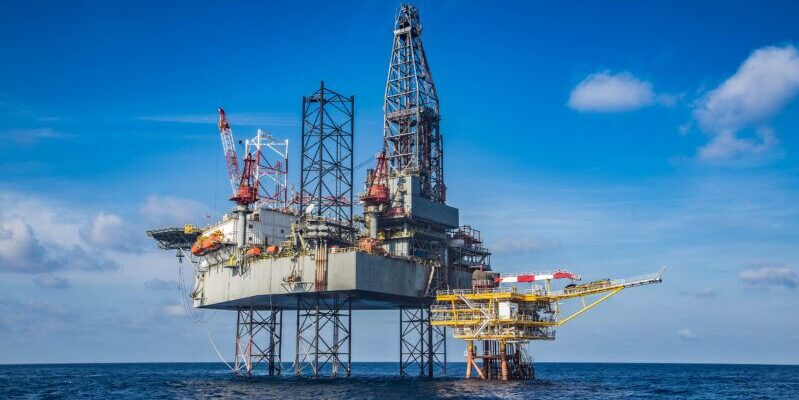
Shell Namibia Country Chair and NAMPOA Chairperson Eduardo Rodriguez highlighted the challenges of Namibia’s offshore conditions, which include some of the deepest and most remote waters in the world—up to 3,000 meters deep and 200 to 300 kilometers offshore.
He noted that the cost of drilling the first high-impact well exceeded US$100 million, and that investment decisions ranging from US$10 to US$15 billion require a stable operating environment.
Rodriguez stressed that Namibia competes with mature jurisdictions such as the Gulf of Mexico, Brazil, and Guyana, and that fiscal predictability will be crucial for securing future project approvals.
“Stability clauses, arbitration provisions, and predictable policy frameworks are essential to attract this level of capital. Namibia has drilled 26 deep-water wells in four years—an unprecedented rate for any frontier basin—so only a few policy adjustments are needed to drive sustainable growth,” he said.