ExxonMobil Boosts Offshore Safety and Efficiency in Angola with Drone and 3D Sonar Technology
Global energy major ExxonMobil is revolutionizing offshore oil and gas operations in Angola through the adoption of drone-based inspections and advanced 3D sonar imaging.
The company invests nearly $1 billion annually in innovative technologies, with a strong focus on improving safety, reducing downtime, and enhancing data accuracy across its global operations.
Speaking at an ExxonMobil-sponsored pre-conference session during the Angola Oil & Gas 2025 Conference & Exhibition, Vera Veloso, Integrity Engineering Supervisor at ExxonMobil, highlighted how these technologies are transforming inspection processes in Angola.
ExxonMobil holds stakes in three deepwater blocks covering almost two million acres, including legacy assets such as Block 17.
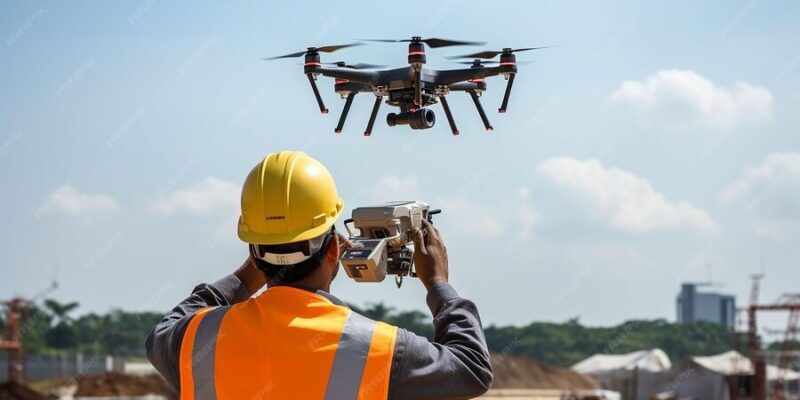
Traditionally, inspections required rope-access teams and operational shutdowns. With drone technology, however, ExxonMobil can now inspect hazardous areas without human intervention, significantly improving safety. “These drones are able to reach hazardous areas without the need for human intervention.
This improves the efficiency and safety of inspections. They can also be done while operations continue – eliminating the need for costly shutdowns,” Veloso explained.
The results have been significant. Drone-based inspections have cut inspection times by 60%, delivering faster, higher-quality data while minimizing disruption to offshore operations.
In addition, ExxonMobil has deployed echoscope technology with 3D sonar imaging, enabling accurate seabed mapping, trench validation, and real-time monitoring in zero-visibility conditions.
By using sound pulses to generate high-resolution data, the technology provides critical insights for surveillance and risk evaluation. “The main benefit is data accuracy—we are able to access more dimensions of the trench, improving survey efficiency as we are not limited by visibility,” Veloso added.
Future Technology Deployment
Looking ahead, ExxonMobil plans to further integrate cutting-edge tools into its Angolan operations. These include:
AI-driven robotics and drones for autonomous visual, acoustic, and ultrasonic inspections.
AI-powered digital twins to simulate and optimize operations.
Autonomous risk mitigation systems driven by AI decision-making.
Remote operations enabled by 5G and Starlink connectivity.
Through these advancements, ExxonMobil is positioning itself at the forefront of digital transformation in Angola’s offshore sector, driving efficiency, safety, and sustainability while setting new benchmarks for oil and gas operations in deepwater environments.