Angola’s Oil & Gas Sector Embraces Digital Transformation and Clean Energy Transition
Angola is accelerating its transformation into a modern energy hub by deploying cutting-edge digital technologies in oil and gas exploration while expanding its renewable energy portfolio.
The country, traditionally dependent on crude exports, is pursuing a balanced strategy: boosting efficiency in hydrocarbon production while investing in clean energy and infrastructure that can power sustainable growth.
Angola’s oil-rich offshore basins remain a cornerstone of its economy, and operators are increasingly turning to digital tools to unlock new reserves.
In Block 32, Shearwater Geoservices has been contracted by TotalEnergies to conduct a two-and-a-half-month ocean-bottom node (OBN) seismic survey.
The project, which began in January 2025, uses the SW Tasman vessel equipped with dual remotely operated vehicles (ROVs) and high-endurance Pearl nodes. The SW Gallien supports as a dedicated source vessel.
Unlike conventional streamer surveys, OBN provides high-resolution subsurface imaging, helping operators evaluate reservoirs with unprecedented accuracy.
This innovation is particularly important for Angola’s mature deepwater blocks, where efficiency and precision can determine the viability of new drilling campaigns.
Industry analysts note that OBN surveys represent “a step change in Angola’s exploration toolkit,” enabling better reservoir management and reduced drilling risks.
It also marks a significant upgrade from earlier 4D streamer surveys, enhancing Angola’s competitiveness in attracting exploration investment.
At the same time, TGS has reprocessed a 3D seismic dataset in Block 16, covering 3,684 km² in the Lower Congo Basin.
By applying advanced imaging techniques and machine learning algorithms, TGS is enabling sharper reservoir delineation and safer drilling programs.
The improvements are expected to reduce both operational costs and environmental risks, reinforcing Angola’s bid to modernize its exploration sector.
Angola’s domestic refining capacity has long lagged behind its production potential, forcing it to import a significant share of petroleum products.
However, the tide is turning with the commissioning of modular refineries and technology-enabled upgrades.
The newly operational Cabinda Refinery has become a showcase of “smart infrastructure.” Equipped with IoT-enabled monitoring systems and modular units, the refinery optimizes throughput while lowering emissions.
Officials have confirmed that expansion plans are underway to double capacity to 60,000 barrels per day by 2026, helping Angola reduce fuel imports and strengthen energy security.
Beyond Cabinda, the proposed Lobito Refinery and the Lobito–Lusaka Oil Products Pipeline promise to further integrate Angola into regional energy markets.
The pipeline will supply refined fuels to Zambia and beyond, with digital cargo-tracking systems and blockchain-based customs clearance envisioned as part of the logistics ecosystem.
While oil dominates Angola’s hydrocarbon portfolio, natural gas is emerging as a strategic resource. The Quiluma and Maboqueiro non-associated gas fields—currently under development—are expected to deliver 330 million standard cubic feet per day (scf/d) once completed.
What sets this project apart is its reliance on automation and artificial intelligence. The offshore platforms are being designed with AI-driven flow control systems, allowing real-time adjustments in production to maximize efficiency and reduce downtime.
The gas will be processed for both LNG exports and fertilizer production, diversifying Angola’s revenue streams and enhancing domestic industrial output.
Angola is also scaling up renewable power generation as part of its energy transition. The Quilemba Solar Project, located near Lubango, is a flagship initiative co-developed by TotalEnergies (51%), Sonangol (30%), and Maurel & Prom (19%).
Construction began in May 2025, with the first phase designed to generate 35 MW of capacity. A second phase will add another 45 MW, making Quilemba the largest privately-owned photovoltaic facility in Angola.
When completed in the first half of 2026, the plant will supply clean power to nearly 40,000 homes, strengthening grid resilience in southern Angola.
Meanwhile, Angola has set its sights on green hydrogen. A proposed 600 MW facility is projected to produce up to 400,000 tons of hydrogen annually, leveraging Angola’s abundant renewable energy potential.
The final investment decision (FID) is expected within the next year, potentially positioning Angola as one of Africa’s early movers in the hydrogen economy.
Angola’s energy ambitions extend beyond production into logistics. The Lobito Corridor Railway Project, backed by the Africa Finance Corporation, is designed to digitize mineral and fuel transport across Southern Africa.
By introducing smart cargo-tracking systems and blockchain-based customs clearance, the corridor aims to transform Angola into a logistics hub connecting the Atlantic coast with Zambia and the Democratic Republic of Congo.
This integration is expected to unlock trade efficiencies while supporting energy exports and mining shipments.
Speaking at the Angola Oil & Gas Technology Forum, a Sonangol engineer emphasized that the country’s approach is about synergy:
“We’re building an energy ecosystem that’s smarter, cleaner, and more resilient.”
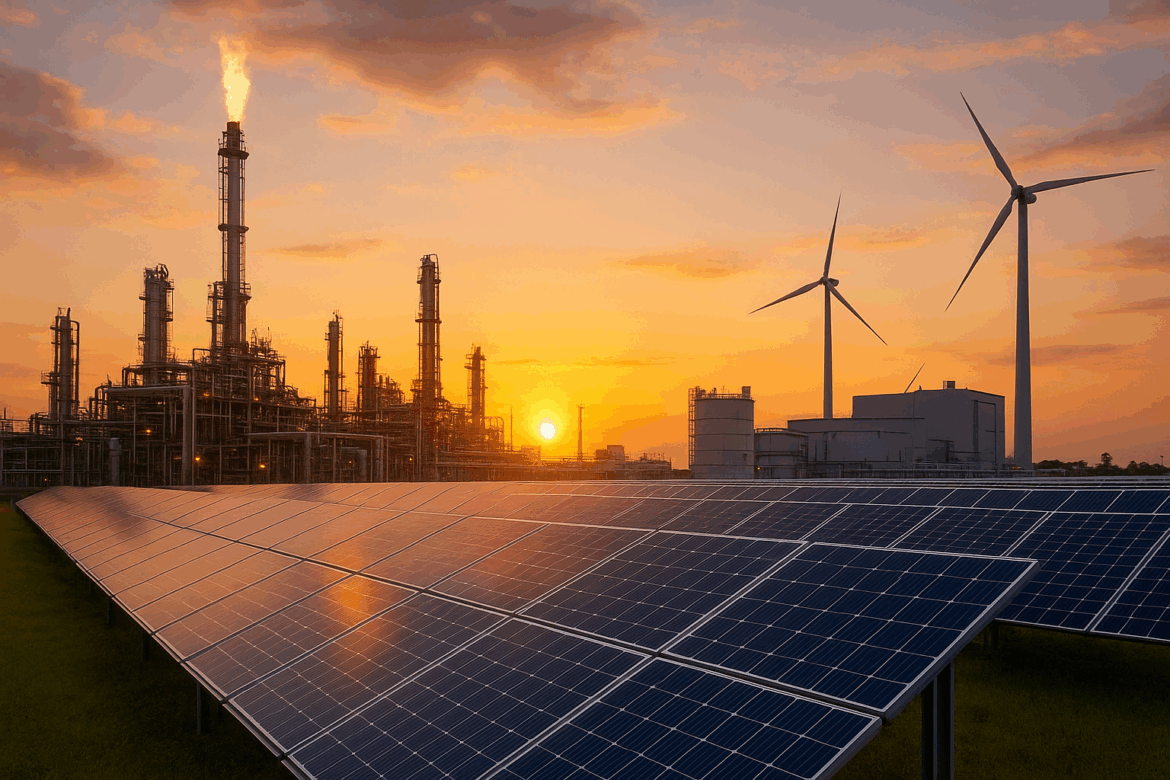
Angola is already sourcing 60% of its electricity from renewables, largely hydropower. By coupling this renewable base with digital oilfield technologies and smart infrastructure, Angola is presenting a new model for how resource-rich nations can pursue energy security while leading the energy transition.
Angola’s strategy reflects a dual commitment: leveraging hydrocarbons more efficiently while investing in future-proof renewable projects.
With subsea imaging upgrades, AI-driven gas production, smart refineries, and solar plants in development, the nation is positioning itself as a leader in digital oil and gas transformation and clean energy adoption in Africa.
If successful, Angola could demonstrate that petroleum producers need not choose between oil and sustainability—they can use technology to drive both.