
President Lourenço Announces September Inauguration of Cabinda Refinery and Revival of Lobito Refinery Project
President João Lourenço has announced that the Cabinda Refinery will be inaugurated in September and confirmed the long-awaited resumption of the Lobito Refinery project after years of delay.
Speaking in Benguela at the opening of the 5th Edition of the Fair of Municipalities and Cities of Angola, the president emphasized that these two major infrastructure projects will significantly reduce Angola’s dependence on imported refined fuels, particularly diesel and gasoline.
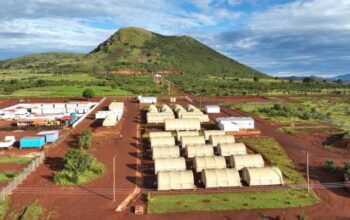
According to the president, the Cabinda Refinery is a strategic asset for both the oil-rich Cabinda province and the country as a whole. Construction began in 2017, and the facility will have an initial refining capacity of 30,000 barrels of oil per day.
Fuel imports remain a major economic burden for Angola, with the country spending more than $660 million on imports in the first quarter of 2025. However, imports fell by 73% compared to the last quarter of 2024, according to official data.
In his remarks, President Lourenço also stressed the importance of empowering municipalities to address key challenges faced by Angolans, including housing, employment, and diversified production of essential goods—particularly food staples.
He highlighted Angola’s economic progress, noting that GDP grew 5.4% in the first quarter of 2025, supported by a strong agricultural sector that produced about nine million tons of food during the period.
The president called for greater productivity, reduced bureaucracy, and increased decentralization of tasks to local administrations, equipping them with more resources to drive development. He emphasized that investments in knowledge, agriculture, and industry are essential to creating jobs, ensuring food sovereignty, and improving the balance of payments.
Highlighting the Lobito Corridor, which begins in Benguela province, Lourenço described it as “more than a railway” — a vital driver of regional development that will benefit communities along the Benguela Railway.
He stressed its importance as a regional integration asset, with potential extending beyond Angola’s borders.
The president also noted growing foreign interest in the corridor, citing the European Union’s recent commitment to provide a financial package for trade, vocational training, transportation, and heritage projects.
The largest share of this funding will be directed toward professional and technical education, which Lourenço said will be key to sustainable economic growth.