African Development Bank Invests $14.5 Million in Zambia’s 20MW Garneton North Solar Project to Power 82,000 People
The African Development Bank (AfDB) has approved a $14.54 million financing package to support the 20MW Garneton North Solar Project in Zambia’s Copperbelt Province, a key step in advancing the country’s renewable energy capacity and addressing its persistent power shortages.
Once operational, the project will deliver clean and reliable electricity to approximately 82,000 people, while reducing annual carbon emissions by an estimated 58,740 tonnes of CO₂.
The AfDB’s financing includes $7.27 million from its own resources, matched by concessional funding from a Development Finance Institution.
The investment underscores the Bank’s commitment to closing Zambia’s energy gap and supporting Mission 300, an initiative that aims to provide electricity access to 300 million Africans by 2030. Zambia was among the first countries to launch a national energy compact under Mission 300 in January 2025.
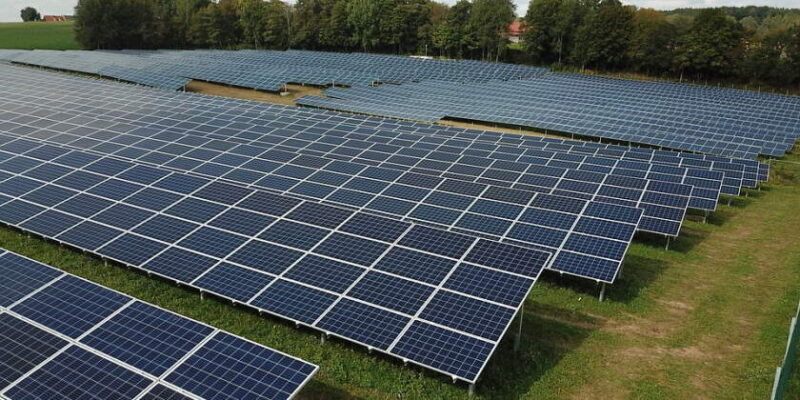
The $24.5 million Garneton North Solar Project will involve the design, construction, operation, and maintenance of a 20MW solar power plant, connected to the national grid via a 10-kilometer, 33kV transmission line.
Under a 25-year take-or-pay Power Purchase Agreement (PPA), the Zambia Electricity Supply Corporation Limited (ZESCO) will buy all the electricity generated by the plant.
According to Wale Shonibare, AfDB’s Director of Energy Financial Solutions, Policy, and Regulation, the project marks an important milestone for Zambia’s renewable energy journey. “It will help restore investor confidence in the power sector, attract private capital, and support the country’s efforts to close its energy access gap while advancing Mission 300 goals,” he said.
The Garneton North Solar Project is one of six projects selected by the Zambian government under the Global Energy Transfer Feed-in Tariffs (GETFiT) program, designed to unlock private investment in small- and medium-scale renewable projects.
During the construction phase, the project will create 90 jobs, including five positions for women and 50 for youth, while the operational phase will employ 10 staff, with two women and six youth among them. The initiative is expected to strengthen Zambia’s power grid, reduce blackouts, and enhance national energy security.
Through the GETFiT program, Zambia aims to procure 120MW of renewable energy capacity, diversify its power generation mix, and reaffirm its attractiveness to private investors in the energy sector.
Jing Li, Division Manager of Energy Financial Solutions at AfDB, said the project highlights Zambia’s commitment to broadening its energy mix beyond hydropower. “Expanding renewable capacity will reduce power outages, ensure more stable electricity supply, and help maintain cost-reflective tariffs for consumers,” she noted.
The AfDB emphasized that the Garneton North project aligns with its Ten-Year Strategy (2024–2033) and the New Deal on Energy for Africa, promoting low-carbon development, gender inclusion, youth employment, and private-sector-driven renewable energy growth.
By expanding solar generation, the project will contribute to universal electricity access, support climate resilience, and demonstrate the transformative potential of clean energy investment in Zambia and across Africa.